10 Free Spins: the Ten-Round Batch, Weighed
Ten spins price in one multiplication: 10 rounds at the assigned stake, a small expected return, and wagering that decides whether winnings leave.
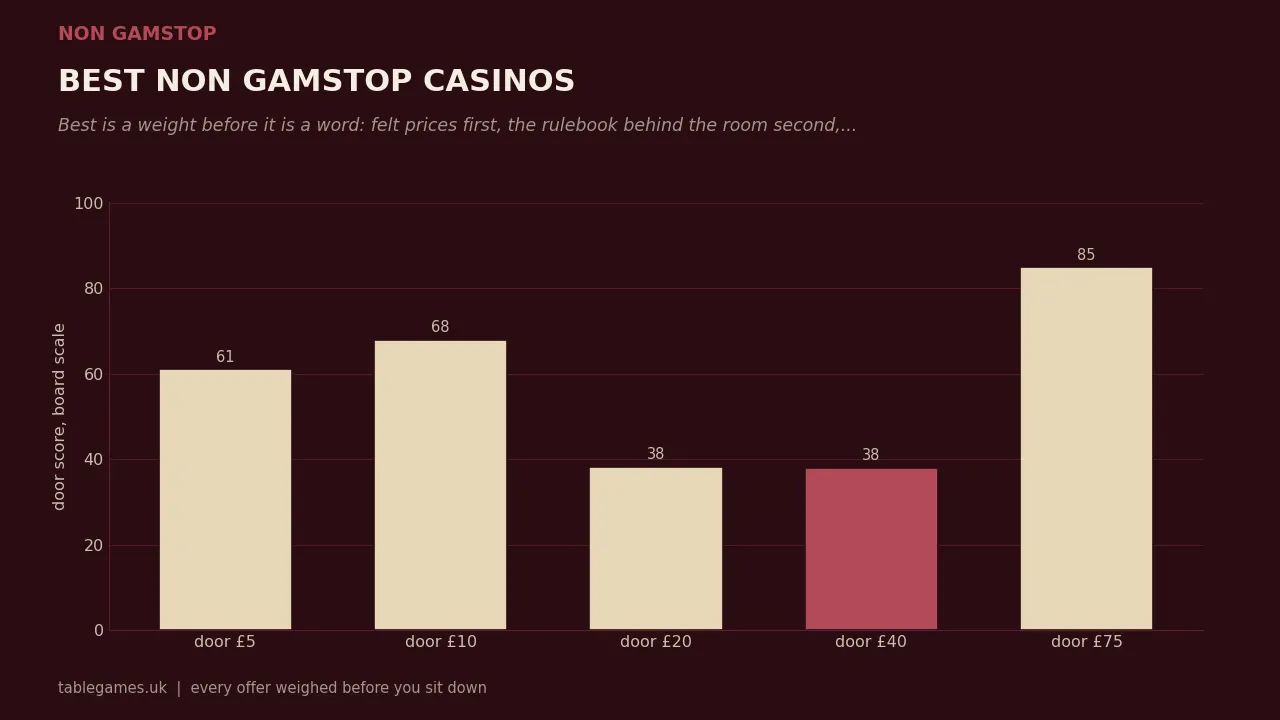
The table score
Four operators, weighed the way a croupier weighs a table: the entry price, the terms weight, the rails on offer, and how fast the cage pays. The scores are ours; the offers are quoted in the operator's own words.
Every card carries its table score out of 10 and four axis bars - licence, terms, payments and withdrawal. Offers move often - the operator's own page is always the current truth.

Welcome bonus €/£5,000 + 500 FS
Weigh the offer
Welcome pack €5,000 + 500 FS + €650 free bet
Weigh the offer
Casino welcome bonus 805% up to €6,400 + 280 FS
Weigh the offer
Welcome package 300% up to €/£1,000 + 150 FS
Weigh the offerCards appear in table-score order, the lower minimum deposit breaking ties. The bars visualise published figures, not a promise; nothing here is a recommendation to gamble, and the operator's own terms decide every claim.
What 10 free spins weighs at the promo page
The offer is ten rounds on a named slot, and the count is the weakest figure on the page. What prices the batch is the stake the operator pins to each round: the same ten spins at 5p face £0.50 and at 20p face £2.00, a four-fold spread behind one headline. Find the assigned stake in the offer's terms; it is the first figure to read, because every other figure multiplies from it.
The second figure is the game itself. Ten-spin offers are commonly tied to one named slot rather than left to the player's choice, which fixes both the stake box and the return percentage the rounds carry. That is not a small print detail: the named game decides what the ten rounds are worth before wagering, caps or clocks touch them. Read the game's name, then its assigned stake, in that order.
Everything else on the promo page - the count in large type, the art, the claim button - is the same offer wearing different sizes. The batch is small by design: it is a sample, priced to cost the room pennies and to cost the player an account. This page weighs it as a price rather than a gift, which is the honest way to read ten rounds.
The per-spin weigh-in: ten rounds at twelve pence
Take a batch that assigns 12p a round, a mid figure for the class. The face value is ten times twelve, £1.20, and that multiplication is the whole top line. Per spin, the round is worth 12p of nominal play; the batch is worth ten of them; nothing else on the promo page moves those numbers. A 5p batch would face £0.50 and a 20p batch £2.00 - same count, four times the price, which is why the assigned stake is the row that matters.
Expected return trims the face. Slots commonly print a return-to-player figure between 94% and 97%; at 96%, ten 12p rounds carry an expected return of about £1.15, or 11.5p a spin. The gap is small and it is real: roughly 5p on the batch, the price of the house's fraction over ten decisions. five rounds, the smaller batch runs the same arithmetic at half the count, and the per-spin logic survives the resize untouched.
Two honest notes belong beside the arithmetic. Expectation is a long-run average, and ten spins is the shortest of short runs: the batch lands anywhere from nothing to a feature round, and the £1.15 is what ten thousand batches would average, not what tonight's will print. And the assigned stake is the operator's choice, so the same headline can carry a richer or thinner batch depending on which game and stake sit behind it.
Per-spin figures also make the comparisons honest downstream of the offer. Ten 12p rounds at a 96% return carry about 11.5p of expectation a round; a room that assigns 8p carries about 7.7p; one that assigns 20p carries about 19.2p. The spread between the thinnest of those batches and the richest is 12p a spin, £1.20 over the ten, which is the same size as the whole face of the thinnest batch. That is why the stake row is read first and the count row second.
10 free spins at a glance
- Entry price£20 typical
- Wagering50x on spin winnings
- Payout window3–5 working days
- Payments5 rails incl. e-wallet
The wagering attached to spin winnings
The £1.15 expected return is not a balance; it is a stake in a wagering machine. Spin winnings commonly carry a wagering multiple - twenty to fifty times is the usual range, hedged because offers vary - and the worked figure at 40x is £46.00 of play owed before the winnings can leave. At 20x the same winnings owe £23.00. The multiple applies to the winnings, not the face value, which is the one mercy in the line.
Weighed per pound, the workload is the offer's real price. £46.00 owed against £1.15 expected is a ratio of forty to one: forty pounds turned over for every pound the batch is expected to print. Slot rounds clear it at the assigned stakes; table play commonly counts little or nothing toward wagering, so the clearing happens at the reels or it does not happen at all. The multiple is therefore the second row on the card, read right after the stake.
The clean question to ask at the promo page is what the winnings buy. Ten spins that print £1.15 into a 40x machine are ten rounds of labour at a capped upside; the same spins credited without wagering are 11.5p of expected balance, spendable as it lands. Both offers read as 10 free spins, and the terms decide which one arrived. the spins family on one page collects the wagering and the caps for the whole class.
One more line sits under the multiple: what happens to winnings once the wagering is cleared. Commonly they convert to real balance and leave by the ordinary routes, subject to the cap; some offers keep a lid on conversions and pay the capped figure only; a few hold winnings as play credit rather than cash, which prices the whole batch at zero in money terms. The difference lives in one clause, and the clause is printed beside the multiple.
Caps and clocks on the ten-round batch
Two limits sit over the batch, and both are printed. The cap: many offers limit what the spins can convert, commonly somewhere in the tens of pounds, and a £100 ceiling sits about 87 times above the £1.15 expected return, which tells you how rarely the cap binds. The clock: batches commonly expire inside a week, and winnings that carry wagering inherit a deadline of their own beside it.
The clock works quietly because ten spins take seconds. The reels run about three seconds a round, so the batch itself is half a minute of play; everything that matters - expiry, wagering deadline, cap - happens after the last reel stops. A batch claimed and then forgotten is the commonest outcome on this class, and an expired batch is the cheapest lesson on the page. Neither limit announces itself: both sit in the terms, and both apply from the claim.
Max-bet rules close the limits section. Where winnings carry wagering, the terms commonly set a maximum stake per round while clearing - a few pounds, hedged - and a breach can void the balance. Read the three figures together: the cap over the batch, the clock over the expiry, the stake ceiling over the clearing. All three are per offer, and all three are printed.
Expiry deserves one worked line, because it is the figure players misread most often. A batch credited on a Monday that expires inside a week gives seven days to claim, spin and start clearing; the spins themselves take half a minute, so the real deadline sits on the wagering rather than the spinning. Where the terms give the winnings thirty days to clear and the batch seven days to spin, the two clocks run at once, and the shorter one starts at the claim, not the first reel.
| Brand | Welcome offer | Wagering | Min dep. | Withdrawal | Payments | Licence | Table score | Terms |
|---|---|---|---|---|---|---|---|---|
| Mega Casino | Matched deposit up to £/€200 (typical) | 30x–40x by productbest | £10+5 | 1–3 working days+3d | Visa · Mastercard · Skrill · Apple Paybest | UKGC | 8.2 / 10 | Check the terms first |
| PlayOJO | 50–100 wager-free spins (typical range) | Wager-free spins marketed | £10–£20+5 | 1–2 working days+2d | Visa · Mastercard · Neteller · Pay by mobilebest | UKGC | 7.9 / 10 | Check the terms first |
| BetMGM | £30–£50 in free bets (typical range) | 30x–40x by productbest | £5–£10best | 24h e-wallets, 2–5 days cards+5d | Visa · Mastercard · PayPal · Apple Paybest | UKGC | 7.7 / 10 | Check the terms first |
| Velobet | 100% up to €/£1,000 + spins (typical range) | 30x–45x by gamebest | €10 equivalent+5 | Instant–24h on cryptobest | Bitcoin · Litecoin · Visa · Bank transferbest | Offshore | 6.8 / 10 | Check the terms first |
| 666 Casino | 100% up to £/€100 + spins (typical) | 30x–40x by productbest | £10–£20+5 | Under 24h e-wallets+24d | Visa · Mastercard · PayPal · Bank transferbest | UKGC | 6.6 / 10 | Check the terms first |
| JackpotCity | 100% up to €/£100 + 50 spins (typical) | 30x typicalbest | €10–€20+5 | 2–5 working days+5d | Visa · Mastercard · Trustly · Bank transferbest | Offshore | 5.9 / 10 | Check the terms first |
| 10bet | 100% up to €200 + spins (typical range) | 40x typical+10x | €20+15 | 1–3 working days+3d | Visa · Mastercard · Skrill · Netellerbest | Offshore | 5.7 / 10 | Check the terms first |
| Magic Red | 100% up to €200 + spins (typical range) | 40x typical+10x | €10–€20+5 | 2–5 working days+5d | Visa · Mastercard · Trustly · Bank transferbest | Offshore | 5.2 / 10 | Check the terms first |
| Boneenbet | 100% up to €/£1,000 + spins (typical range) | 35x typical+5x | €10 equivalent+5 | 24–48h (crypto fastest)+48d | Bitcoin · Litecoin · Visa · Bank transferbest | Offshore | 4.5 / 10 | Check the terms first |
| Roobet | Matched deposit up to €/£500 + spins (typical) | 35x typical+5x | €10 equivalent+5 | Under 24h on crypto+24d | BTC · ETH · USDT · MuchBetterbest | Offshore | 4.5 / 10 | Check the terms first |
| Rainbet | Crypto match up to 1 BTC equivalent (typical) | 40x typical+10x | €20 equivalent+15 | Under 24h on crypto+24d | BTC · ETH · USDT · MuchBetterbest | Offshore | 4.1 / 10 | Check the terms first |
| NineWin | Matched deposit up to €/£500 + spins (typical) | 45x typical+15x | €10–€20+5 | 24–48h (crypto fastest)+48d | BTC · ETH · USDT · MuchBetterbest | Offshore | 3.8 / 10 | Check the terms first |
Ten spins against the bigger bundles
The class runs from five spins to thousands, and the per-spin row is what makes the sizes comparable. Twenty spins at 10p face £2.00; ten at 12p face £1.20; a thousand at 10p face £100. Count is the headline, stake is the price, and the count alone has never priced a batch. Compare any two offers on stake times count and the whole class lines up.
Where the ten-spin batch earns its keep is as a first read of a room. The offer costs the operator little, costs the player a registration, and prints the room's whole bonus style in miniature: the assigned stake, the wagering multiple, the cap, the clock. A player who reads those four figures on a ten-spin batch has practised the reading every larger bundle uses. The next size up in the class reads on the same rows, one row at a time.
The honest disadvantage is the sample size. Small batches swing: one feature round can lift the batch far above its expectation, and a run of dead spins can print nothing at all. Neither outcome changes the price; both change the story a player tells about it. Weighed cold, ten spins are ten spins, whatever they printed. A batch that prints nothing was still ten rounds at the house's fraction, and the evening's tally should carry it at the expected figure rather than at the hope.
A worked comparison settles the class's shape. Ten spins at 12p face £1.20 and expect about £1.15; twenty at 5p face £1.00 and expect about £0.96; fifty at 10p face £5.00 and expect about £4.80. The largest face is not the largest count, and the largest count is not the largest face, which is the whole argument for reading the stake row before the count row. Priced per spin, the three differ by pence; priced per batch, they differ by pounds.
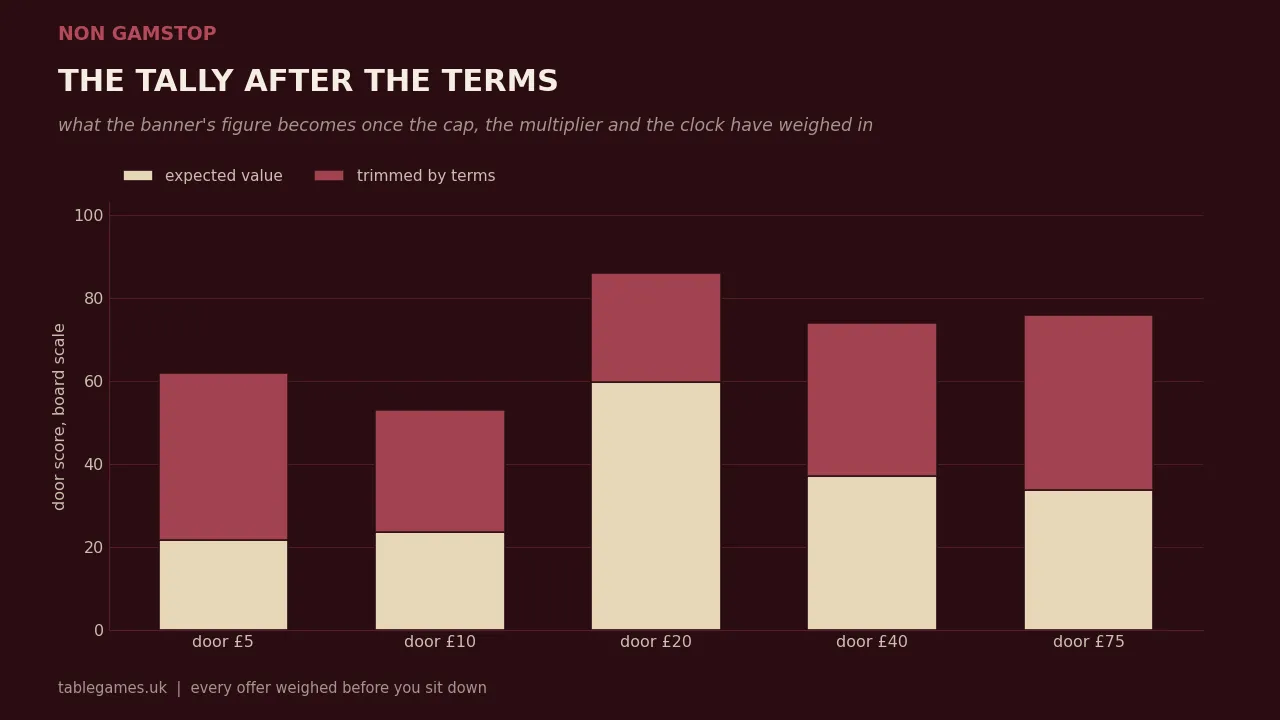
Who the ten rounds suit
The batch suits a reader, not a grinder. A player who wants to see a room's cashier, its terms page and its bonus style before any money moves gets a fair sample for a registration; a player chasing the £1.15 as income is pricing ten rounds wrong. The offer is a coupon with a wagering machine attached, and the coupon is worth about what the terms say it is worth.
Table players deserve the straight version: free spins are slot rounds, and the wagering they carry is commonly cleared at the reels, because table play counts little toward it and is sometimes excluded outright. A baccarat player claiming ten spins is buying a slot sample, not a table credit, and the distinction outweighs the batch. The rooms that run these offers are commonly licensed offshore, which moves the desk that answers a complaint without touching the arithmetic of the offer.
For the curious, the batch is the cheapest look in the class; for the sceptical, it is a registration with strings printed beside it. Both readings are correct, and the terms page is where a reader turns into either one. The weigh card below collects the page in one place, and it reads in under a minute. Its order is the order the money moves: face, expectation, wagering, cap, clock, and the payout route last of all.
The weigh card: ten spins, priced once
One line of multiplication prices the batch, and four lines of terms price everything attached to it. Chalked in order, the card turns a headline into a figure: stake times count first, the expected return second, the wagering multiple third, the cap and the clock last. Read that way, ten spins take a minute to price, which is less time than claiming them. Nothing on it needs more than the one multiplication at the top.
The batch, priced before the claim button:
- Multiply the assigned stake by the count for the batch's face value.
- Apply the game's return figure to get an expected return per spin.
- Read the wagering multiple on the winnings, not on the face value.
- Check the cap over conversions and the expiry clock on the batch.
- Compare rival offers on stake times count, never on the count alone.
- Decide what a registration is worth before the claim button takes it.
Priced once, the batch is honest: £1.20 of face at a 12p stake, about £1.15 expected, forty pounds of wagering at the worked multiple, a cap and a clock over the lot. The rows repeat across the class in the same order, from five spins to a thousand. Learn them here, where the stakes are pennies, and every larger bundle prices itself on sight.
Frequently asked questions
What are 10 free spins actually worth?
The assigned stake times ten, trimmed by the game's return. At a 12p stake the batch faces £1.20 and carries an expected return near £1.15 at a 96% figure; a 5p batch faces £0.50 and a 20p batch £2.00. The stake is written into the offer's terms, and it moves the value more than any other line on the promo page.
Do I need to deposit to claim the spins?
Some ten-spin offers are credited at registration and some require a first deposit; the claim line on the promo page states which. Registration batches are the cleaner of the two, since they cost a sign-up rather than a stake. Either way, the wagering terms and the expiry clock apply from the moment the rounds are credited, not from the first spin.
Can I withdraw winnings from 10 free spins straight away?
Usually no. Winnings from spin batches commonly carry a wagering multiple - twenty to fifty times is the common range - and the worked figure at 40x is £46.00 of play owed per £1.15 expected. Where an offer credits winnings without wagering, the balance is spendable as it lands, subject to the offer's cap. That difference is the whole read on this page.
Why do the spins pay so little?
Because ten is a small count and the stake is the operator's choice. The headline multiplies whatever stake is assigned: ten 12p rounds face £1.20, and expectation trims the face by the house's fraction, about 5p on the batch at a 96% return. The offer is priced as a sample, not a stake, and the terms page says so in figures.
What happens if I win a big amount on the spins?
The cap decides. Batches commonly carry a ceiling on what the spins can convert, and a win above it is paid to the ceiling rather than in full - a £100 cap sits far above the £1.15 expectation, which is why caps bind rarely and matter hugely when they do. The figure is printed per offer, and it is worth reading before the claim rather than after the win.
Do table games clear the wagering from spin winnings?
Commonly no. The terms on these offers usually count slot play in full toward wagering while tables count a small share or nothing, and some exclude live tables outright. Spin winnings are therefore cleared at the reels or not at all, which matters for table-first players claiming a slot batch. The weighting table sits in the offer's terms, next to the multiple.