Skrill, NETELLER and Trustly Casinos: the Rails, Weighed
Three rails, two shapes: the wallets park a balance between bank and room, Trustly moves the money straight from the bank, and both prices are chalked below.
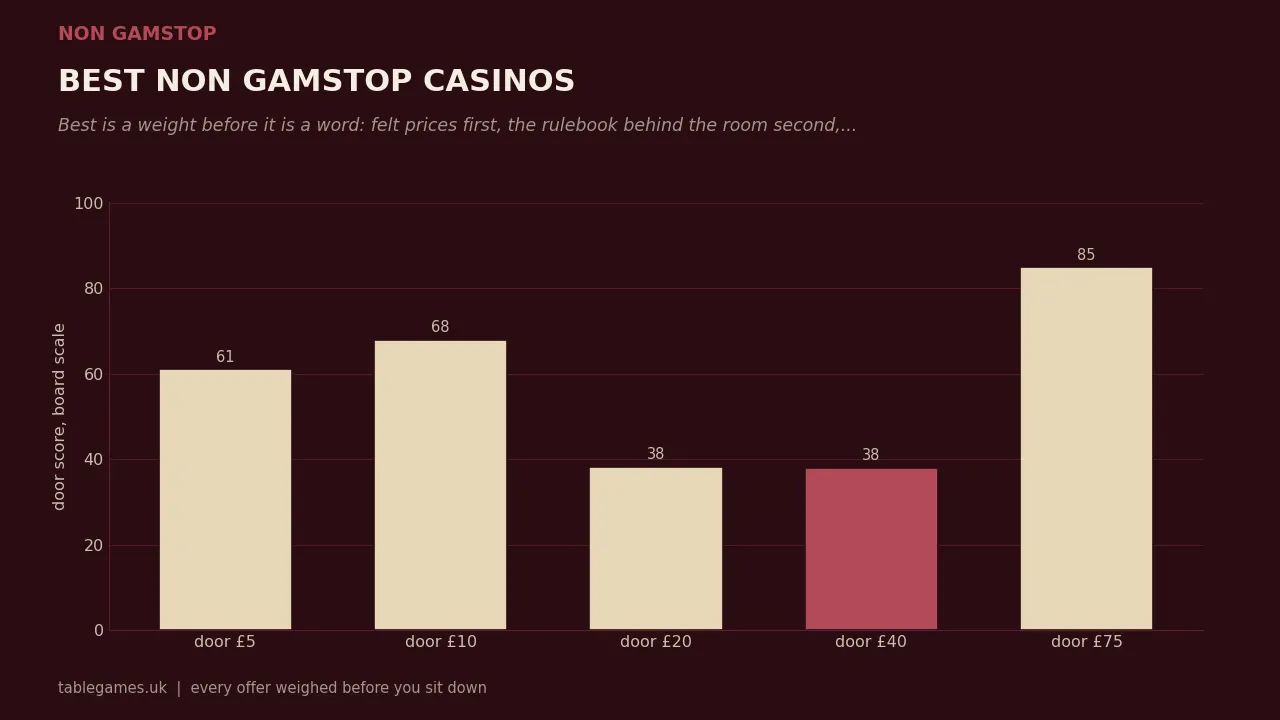
The table score
Four operators, weighed the way a croupier weighs a table: the entry price, the terms weight, the rails on offer, and how fast the cage pays. The scores are ours; the offers are quoted in the operator's own words.
Every card carries its table score out of 10 and four axis bars - licence, terms, payments and withdrawal. Offers move often - the operator's own page is always the current truth.

Welcome bonus €/£5,000 + 500 FS
Weigh the offer
Welcome pack €5,000 + 500 FS + €650 free bet
Weigh the offer
Casino welcome bonus 805% up to €6,400 + 280 FS
Weigh the offer
Welcome package 300% up to €/£1,000 + 150 FS
Weigh the offerCards appear in table-score order, the lower minimum deposit breaking ties. The bars visualise published figures, not a promise; nothing here is a recommendation to gamble, and the operator's own terms decide every claim.
What does a skrill neteller trustly casino change about the stake?
Nothing on the felt answers to the deposit rail. The pockets on the wheel, the commission the banker line carries, the price a natural pays - a skrill neteller trustly casino runs the same games at the posted fractions any other room runs, because the route the money takes does not touch them. What the rail changes is the path: how the deposit arrives, what name the charge travels under, and what the room asks for before winnings leave. The stake boxes at the cashier - minimum, maximum, which rails a new account can open - are set room by room and posted on the cashier page. This page weighs the three paths.
The three names describe two shapes. Skrill and NETELLER are wallets: money is loaded onto a prepaid balance that sits between the bank account and the room, and the room's records carry the wallet rather than the card behind it. Trustly is a pay-by-bank rail: each deposit is authorised straight from the player's own bank account through an open-banking connection, with no wallet balance sitting in between and no card details changing hands. The functional difference is the middleman. One shape stores money and the other only moves it, and the storage is where several of this page's practical differences begin.
The order of the weighing follows the money. Route in: what the deposit costs, how fast it lands, and whether the rail qualifies for the welcome offer. Route out: whether winnings can travel back the same way, and what the room asks for before the first payout. Statement: the name on the bank record and how legible the month's spend reads. Three questions, three lines on the card, and each rail answers them differently. Weighed in that order, a cashier page takes about a minute to read, which is less time than most adverts take to scroll past.
The wallets: Skrill and NETELLER at the cashier
The wallet shape adds an account to the stack. Money moves from the bank onto the wallet balance, then from the wallet to the room, and the room's records carry the wallet rather than the card behind it. Deposits land at once, which is the shape's main selling point, and the cashier page lists the room's own minimums and maximums for the rail. The price of the convenience is a second account: its own sign-up, its own checks, its own terms, and its own balance to keep in order. A wallet is a holding pen with paperwork attached, and the paperwork is the part adverts skip.
Two details deserve chalking before the first wallet deposit. The first is the name match: rooms commonly expect the wallet to be registered to the same name as the player account, and a mismatch surfaces at the worst possible moment, which is the first withdrawal. The second is the bonus line: a good number of rooms, British-licensed ones especially, write e-wallet deposits out of their welcome offers, so a deposit that lands through a wallet may not qualify for the advertised match. Both details live in the room's terms, and both are cheaper to read in advance than to discover at the cage.
The wallet's second act is the return trip. Winnings can commonly be withdrawn back to the same wallet, and the route is widely the quickest payout a room runs, because the money is returning to an account the room has already paid into rather than travelling somewhere new. The timing is still the room's to set: the honest figure is the window on the payments page, not the one an advert implies. Weighed together, the wallets price as fast in, fast out, one extra account, and a bonus line that wants reading before the deposit rather than after.
Skrill/neteller/trustly casino at a glance
- Entry price£20 typical
- Wagering50x on bonus
- Payout window2–5 working days
- Payments5 rails incl. e-wallet
Trustly and the pay-by-bank rail
Trustly sits on the other side of the split: it moves money rather than storing it. A deposit is authorised straight from the player's own bank account through an open-banking connection, the balance lands at once, and there is no wallet to fund, top up or remember. The name on the bank account is the name on the deposit by construction, which quietly removes the mismatch problem the wallets carry. The rail's figures - minimums, maximums, availability to a new account - are posted room by room on the cashier page, exactly as any other route's are.
The rail's limits are the mirror of its shape. Pay-by-bank is deposit-first: there is no wallet balance to return to, so withdrawals commonly route elsewhere - a bank transfer, or the card the room supports - though some rooms push payouts back through the same open-banking connection, and the cashier page says which. The documents behind a first withdrawal still exist; money arriving from the player's own named bank account shortens that conversation, but it does not close it. how the payout windows compare rail by rail collects the timing across the routes, and the pattern holds: quick deposits never settle the withdrawal half of the card on their own.
The statement line is the rail's quietest virtue. A pay-by-bank deposit posts on the bank statement the player already reads, under the room's or the processor's name, with the amount in plain figures. There is no separate balance to check, no second app to open at month end, and no load step where the spend can drift away from the record. For a player who wants the month's gambling legible in one place, that counts for more than any speed claim, and it is the line to weigh directly against the wallets' extra account.
Availability is the last figure and the least advertised. Some rooms open the rail to new accounts at once; others switch it on after a first deposit by another route, and a few run it for deposits only in sterling. The cashier page names what is open on the day, and the honest plan checks it before the session is built around the rail. A route assumed and then missing turns the deposit step into a detour, and the detour is where unpriced time goes.
Bonus terms and the rail's small print
Bonus terms are where the rails stop being interchangeable. The common pattern, on British-licensed rooms especially, is a welcome offer that counts card and bank deposits in full while writing the e-wallets out of the qualification list. The wording sits in the offer's own terms, not in the advert, and it is the difference between a deposit that starts a bonus and a deposit that starts nothing. Rooms differ and the pattern shifts over time, so the line wants reading per offer rather than assumed in either direction.
Wagering is the second line, and it weighs the games rather than the rails: tables are commonly set at a small share of the rate slots earn against a bonus, and some offers shut live tables out altogether, so the deposit rail can qualify a player for a bonus the tables cannot usefully clear. where a prepaid voucher meets the same terms walks that small print from a different rail, and the lesson transfers unchanged: the offer's terms decide the value, not the method's advert.
The honest tally, then, has two steps: the rail decides whether the bonus starts, and the game weighting decides whether it can finish. Both are printed, both are readable in a couple of minutes, and neither is visible on the deposit button. A player who intends to claim a welcome offer reads the qualification list before choosing the rail. A player who never claims bonuses can pick on speed and statement alone. Two different players, two different best rails, and the same cashier page settles both.
| Brand | Welcome offer | Wagering | Min dep. | Withdrawal | Payments | Licence | Table score | Terms |
|---|---|---|---|---|---|---|---|---|
| Betfair | £20–£50 free bet or cashback (typical) | Commission model — no bonus wagering | £10+5 | 1–2 working days+2d | Visa · Mastercard · Skrill · Apple Pay-1 rails | UKGC | 7.9 / 10 | Check the terms first |
| Mr.Play | Bet £10 get £30–£40 (typical) | 35x typical+5x | £5–£10best | 24h e-wallets, 2–5 days cards+5d | Visa · Mastercard · Neteller · Pay by mobile-1 rails | UKGC | 7.4 / 10 | Check the terms first |
| Kinghills | Crypto match up to 1 BTC equivalent (typical) | 30x–45x by gamebest | €10 equivalent+5 | Instant–24h on cryptobest | Bitcoin · USDT · Visa · Mastercard-1 rails | Offshore | 6.8 / 10 | Check the terms first |
| Parimatch | Matched welcome up to €/£300 (typical) | 30x typicalbest | €20+15 | 1–3 working days+3d | Visa · Mastercard · Trustly · Bank transfer-1 rails | Offshore | 6.4 / 10 | Check the terms first |
| QuinnBet | 100% up to £/€100 + spins (typical) | 35x typical+5x | £10+5 | Under 24h e-wallets+24d | Visa · Mastercard · Skrill · Apple Pay-1 rails | UKGC | 6.3 / 10 | Check the terms first |
| LottoGo | Free bets / credits on first ticket (typical) | 40x on bonus funds+10x | £10+5 | 24–48h e-wallets+48d | Visa · Mastercard · Neteller · Pay by mobile-1 rails | UKGC | 5.9 / 10 | Check the terms first |
| 10bet | 100% up to €200 + spins (typical range) | 40x typical+10x | €20+15 | 1–3 working days+3d | Visa · Mastercard · Skrill · Neteller-1 rails | Offshore | 5.7 / 10 | Check the terms first |
| Gamdom | Matched deposit up to €/£500 + spins (typical) | 40x typical+10x | €10 equivalent+5 | Under 24h on crypto+24d | USDT · BTC · ETH · TRX · Visabest | Offshore | 4.5 / 10 | Check the terms first |
| Rolletto | 150% match + rakeback (typical range) | 35x typical+5x | €10 equivalent+5 | 24–48h (crypto fastest)+48d | Bitcoin · Litecoin · Visa · Bank transfer-1 rails | Offshore | 4.5 / 10 | Check the terms first |
| Roobet | Matched deposit up to €/£500 + spins (typical) | 35x typical+5x | €10 equivalent+5 | Under 24h on crypto+24d | BTC · ETH · USDT · MuchBetter-1 rails | Offshore | 4.5 / 10 | Check the terms first |
| Rainbet | Crypto match up to 1 BTC equivalent (typical) | 40x typical+10x | €20 equivalent+15 | Under 24h on crypto+24d | BTC · ETH · USDT · MuchBetter-1 rails | Offshore | 4.1 / 10 | Check the terms first |
| Fat Pirate | Crypto match up to 1 BTC equivalent (typical) | 45x typical+15x | €20 equivalent+15 | 24–48h (crypto fastest)+48d | Bitcoin · Litecoin · Visa · Bank transfer-1 rails | Offshore | 3.8 / 10 | Check the terms first |
Fees, timing and the tally both ways
Fees on these rails are asymmetric in the common case. Deposits are commonly taken without a room-side charge, while the wallet side can levy its own costs on loading, receiving or currency conversion - and a cross-currency deposit is where wallet fees bite hardest, because the pound is exchanged at the wallet's rate rather than the bank's. Pay-by-bank carries fewer layers: the money moves from bank to room under the bank's own transfer rules. The working figures sit in the wallet's fee schedule and on the room's payments page, both public.
Timing runs deposit-fast on all three routes and payout-fast on only some. The wallets are widely the quickest payout route a room operates; pay-by-bank and card payouts commonly post slower, because a card return travels through the scheme's own settling process and a bank return waits on transfer queues. None of the figures is universal: each room publishes its own windows, and the honest comparison is made from those pages rather than from habit. What holds across the board is the shape - fast in everywhere, fast out only where the route supports it.
The tally, weighed at month end, is the statement. The wallets spread the spend across two records - the room's history and the wallet's own - with the bank showing only the loads. Pay-by-bank and the card keep the whole trail on one statement: room name, figures, dates. Neither record is better in the abstract; the question is which statement the player actually opens. A tally that is never read weighs nothing, whichever rail wrote it, and the rails differ more in where they write than in what they write.
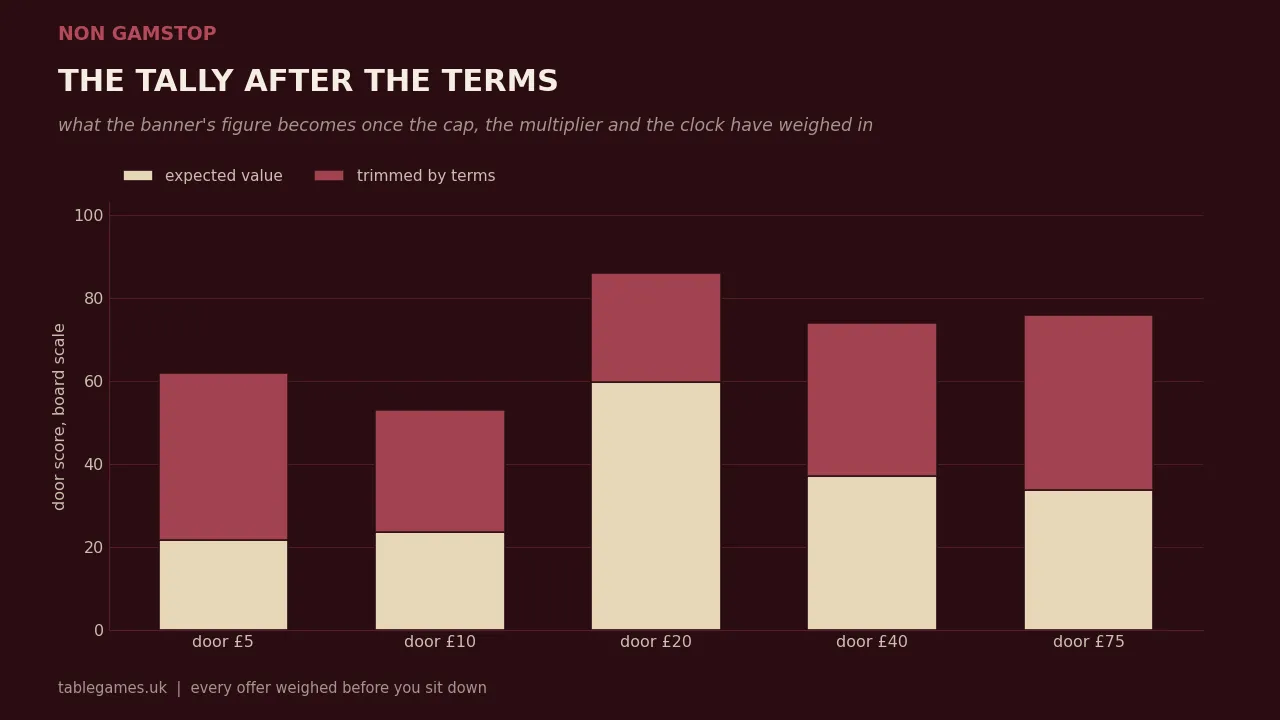
Where each rail suits the table player
The tables price the same whichever rail funds them, so the choice follows the player's habits. A player who chases welcome offers and clears them at the tables wants the rail that qualifies - commonly card or pay-by-bank - because a wallet deposit can strand the plan at the first step. A player who never claims bonuses is free to choose on speed alone, and there the wallets' quick return trip is the strongest figure on the card. Both players should decide before the deposit, because the rail is hard to change after the fact.
Stake size belongs on the card too. The cashier's minimums and maximums are per rail, and a rail closed to a new account is closed whatever its other virtues; several of the rooms that run these rails sit under offshore licences, which changes the desk a complaint reaches rather than the figures at the cashier. Check the cashier page before the plan rather than after the deposit, because a plan is only as good as the rail it assumes, and the assumptions are all published.
The statement preference settles most of the rest. A player who wants one bank statement carrying the whole month chooses pay-by-bank or the debit card and is done. A player who would rather keep the spend off the main statement, and is honest about why, chooses the wallet and accepts the second account's upkeep. Both are disciplined answers to different weighings, and neither is the rails' to make. The card below collects the figures, and the choice between them is a two-minute read.
skrill neteller trustly casino: the cashier card, chalked
Six lines settle the choice before any money moves, and every line is printed somewhere the room or the wallet has already published. Read at the cashier page, the card converts three marketing names into three priced routes in about a minute. Nothing on it promises anything about the tables; every line is a figure about the money's journey, which is the only thing the deposit method actually changes.
The cashier card, chalked before the first deposit:
- Read the welcome offer's qualification list before choosing the rail, not after the deposit clears.
- Check the wallet is registered to the account's exact name before the first deposit.
- Chalk the rail's minimum and maximum at the cashier page before depositing.
- Name the withdrawal route for winnings before the first stake goes down.
- Read the wallet's own fee schedule for loads, receipts and currency conversion.
- Keep one dated record of the month's spend, whichever rail writes it.
The wallets price as speed both ways, a second account with its own upkeep, and a bonus qualification line that wants reading first. Pay-by-bank prices as a single statement, a name match by construction, and a payout half that depends on the room. Neither rail is the better one in the abstract, because the tables price identically behind both. The difference lives in the cashier's figures, the offer's terms and the statement the player reads - and all three are public before the first deposit lands.
Frequently asked questions
Do Skrill and NETELLER deposits qualify for welcome bonuses?
Commonly not, on British-licensed rooms especially: a good number of operators write e-wallet deposits out of their welcome offer qualification lists while counting card and bank deposits in full. The wording lives in the offer's own terms, not in the advert, and it varies room by room and offer by offer. A player planning to claim a bonus should read that list before depositing, because the deposit method decides whether the offer starts at all.
Is Trustly a wallet like Skrill?
No, and the difference shapes the whole comparison. Trustly is a pay-by-bank service: each deposit is authorised straight from the player's own bank account through an open-banking connection, and nothing is stored between the two. Skrill and NETELLER hold a balance of their own, so money is loaded once and spent from the wallet afterwards. The wallet adds an account to manage; pay-by-bank adds a connection but no balance, which removes the top-up step entirely.
Which rail pays out fastest?
The wallets are widely the quickest payout route rooms offer, because the money returns to an account the room has already paid into and verified. Card payouts commonly post slower, and pay-by-bank withdrawals depend on the room: some route them as bank transfers, some push them back through the same open-banking connection. Each room publishes its own windows on the payments page, and those pages rather than habit are the honest source.
Do these deposit methods cost anything?
Deposits usually arrive without a room-side charge, but the wallet side can levy fees of its own on loading, receiving or currency conversion, and a cross-currency deposit is exchanged at the wallet's rate rather than the bank's. Pay-by-bank has fewer layers, since the money moves directly between bank and room. The working figures sit in the wallet's fee schedule and on the room's payments page, and both are readable before depositing.
Will the first withdrawal need documents if I deposited by Trustly?
Usually the standard checks still apply: a first withdrawal commonly summons identity and address papers whatever rail funded the account. A deposit made straight from the player's own named bank account answers part of the question by construction, which can shorten the conversation, but it does not remove the room's right to ask. The prepared answer is the same on every rail: identification, a recent proof of address and the payment confirmation, kept in one file.
Can I use more than one rail on the same account?
Yes, and most players eventually do. Rooms commonly allow several deposit routes on one account, with the cashier page listing the minimums, maximums and availability for each. Two practical notes follow: payouts are commonly expected to return to the rail that funded the deposit, so mixing routes can add a step at the cage; and the welcome offer counts whichever rail the qualifying deposit used, which is why the qualification list is read first.