Free Daily Spins: Weighing the Refill Calendar
The headline total flatters; the daily refill is the honest unit. Weigh a single drop and multiply by attendance, and the real total appears.
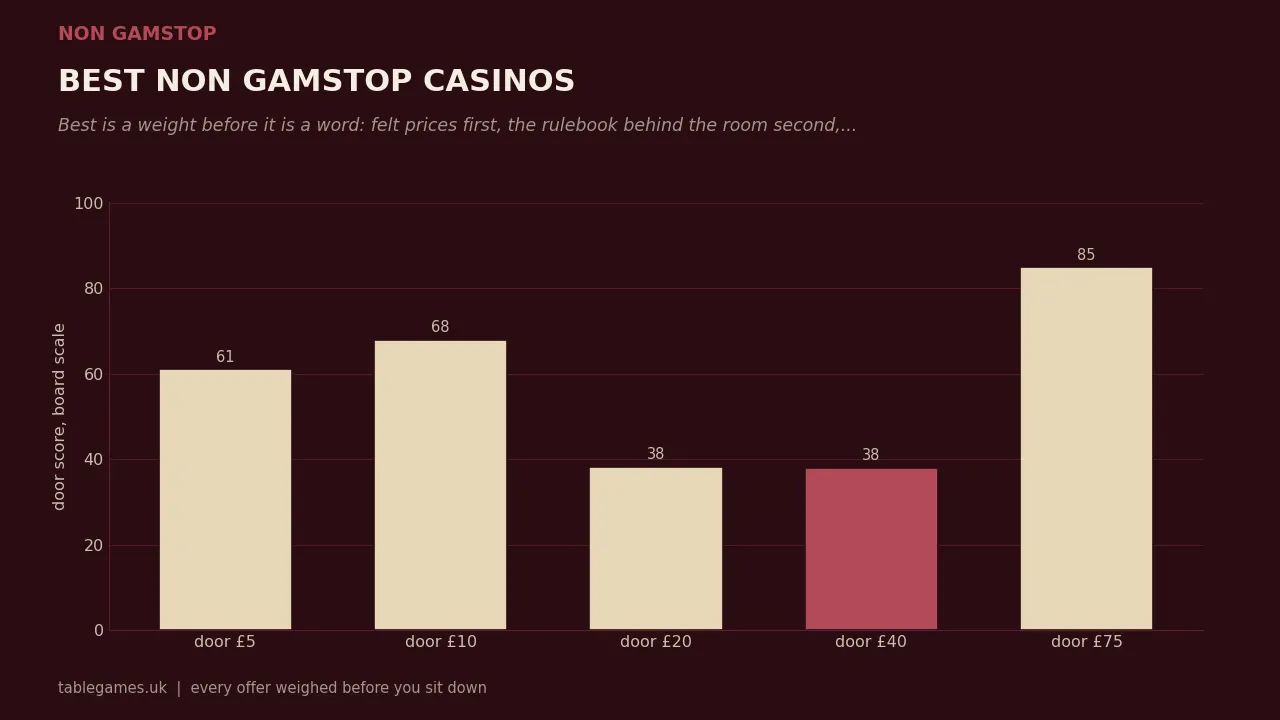
The table score
Four operators, weighed the way a croupier weighs a table: the entry price, the terms weight, the rails on offer, and how fast the cage pays. The scores are ours; the offers are quoted in the operator's own words.
Every card carries its table score out of 10 and four axis bars - licence, terms, payments and withdrawal. Offers move often - the operator's own page is always the current truth.

Welcome bonus €/£5,000 + 500 FS
Weigh the offer
Welcome pack €5,000 + 500 FS + €650 free bet
Weigh the offer
Casino welcome bonus 805% up to €6,400 + 280 FS
Weigh the offer
Welcome package 300% up to €/£1,000 + 150 FS
Weigh the offerCards appear in table-score order, the lower minimum deposit breaking ties. The bars visualise published figures, not a promise; nothing here is a recommendation to gamble, and the operator's own terms decide every claim.
How many free daily spins do you actually get?
A headline of hundreds of spins is almost never a single batch; it is a calendar of small refills, and the honest unit is one day's drop. A typical shape - hedged, because each room sets its own - is twenty spins a day at a 10p box, worth £2.00 of face value per day and £60.00 across a thirty-day month attended daily. The banner prints the hundreds; the calendar pays the twos.
The difference between those two figures is attendance, and attendance is a fact about the player rather than the room. Fifteen days attended out of thirty collects £30.00 of face value, half the headline, and nothing restores the other half. An offer's true size is therefore a multiplication the player performs on their own routine before claiming, which is the opposite of how bonuses are usually sold. Nothing about the rest of the offer changes that figure; everything else multiplies or trims it.
This page weighs the calendar properly: one day priced alone, the stake and machine behind each drop, the twenty-four-hour expiry that deletes misses, the wagering on each day's winnings, and the disagreement between two rulebooks about whether unused drops stack. Rooms on the board above run their own calendars, so the figures taught here are applied per offer from its terms.
The attendance ladder is worth chalking in full. Thirty days attended collects £60.00 of face value; twenty-five collects £50.00; fifteen collects £30.00; a weekend player collecting eight days sees £16.00. Every rung is the same £2.00 a day, and the only variable is the diary, which the player controls and the banner cannot. Priced at the rung the routine will actually reach, the offer stops being a headline and becomes an appointment with a value.
One day at a time: the only honest daily figure
Price a single day and the calendar becomes countable. Twenty spins at a 10p box carry £2.00 of face value, and a title paying back 96 per cent over the long run returns about £1.92 of it; the house's share on the day is eight pence across the twenty goes. That is the daily figure the whole offer is built from, and it is small by design.
a mid-size batch on one calendar weighs the same daily unit against a bigger headline, and the method is identical: tranche size times stake for face value, times the payout fraction for expected return. What changes with the headline is only the number of days, never the shape of a day, which is why one day priced honestly is the key that opens every refill offer on the shelf.
Daily framing also exposes the offer's real cost, which is attention. A calendar of £1.92 expected days pays a player who already visits often, and pays nothing for the visits themselves; the same calendar taxes an irregular player in deleted drops. Neither outcome is hidden - the terms print the drop size, the window and the end date - but only the daily framing converts them into a figure a player can compare against their own routine.
The day also compares rooms cleanly, which batch sizes cannot. One room paying twenty spins a day at 10p and another paying thirty at 5p differ by 50p of face value per day - £15.00 across a month - yet both can advertise similar headlines. One day's drop times the stake box is the common currency; counts without boxes are decoration; and the comparison takes one line of multiplication per room.
Free daily spins at a glance
- Entry price£10 typical
- Wagering45x on spin winnings
- Payout window1–4 working days
- Payments3 rails incl. e-wallet
Stake and machine per drop: what each refill carries
Each drop carries its own stake box and its own named machine, and both figures are the room's to set. At 10p a go a day's twenty spins carry £2.00 of face value; at 5p, £1.00; at 20p, £4.00. The headline never prints the box, and over a month the difference between two boxes is the difference between a £30.00 and a £60.00 offer on an identical calendar.
The machine matters the same way: a point of payout moves a day's expected return by 2p on a £2.00 face drop, and across thirty attended days that compounds to 60p. The honest fraction is the one on the game's info screen, and the terms line names the game or games; where a range is given, price the bottom of it, because that is the figure a careless week collects.
Rooms can and do change the games behind a running calendar, which is a second reason to price from the terms rather than from the first day's screen. A drop that starts on a full-paying title and drifts onto a thinner one loses value silently, a few pence a day. Chalk the box and the fraction from the offer's terms, then re-check the machine if the calendar runs long.
Mid-calendar swaps cost a measurable figure. A drop moving from a title that returns 96 per cent to one returning 94 per cent loses 4p a day at a £2.00 face box - 60p across a fortnight - and nothing on the banner announces the change. Rooms that publish the games for the whole run are the easiest to price; rooms that name them day by day are priced at the bottom fraction, for the same reason a range is priced at its floor.
The 24-hour expiry: how skipped days shrink the headline
The clock on a refill calendar usually runs twice. The short hand is the drop window - commonly a day from landing, hedged because rooms set it - after which that day's spins delete. The long hand is the calendar itself, which ends on a declared date whether or not the drops were collected. Both hands live in the terms, and both deserve a line on the card before the claim.
The arithmetic of a miss is exact. At a 10p box, one missed day deletes £2.00 of face value and about £1.92 of expected return. Miss half a thirty-day month and the deletion is £30.00 of face value - half the headline, gone a day at a time, in slices small enough that no single loss ever feels like the number it adds to. That is how calendars shrink quietly.
[[the 100-spin drop priced once]] prices the alternative format: one batch, one clock, no attendance requirement at all. The comparison is the sharpest test a refill offer faces, because a player who knows they will attend twenty-five days out of thirty can compute exactly which format pays them more - and the answer is a diary question, not a promotions question.
The two clocks read differently on different diaries, which is the last line of the expiry weighing. A daily player loses nothing to the short hand and only the run's end date can touch them. A weekend player loses every weekday drop to the short hand regardless of attention, and should price the offer at their own days: eight attended days on a £2.00 drop is £16.00 of face value, whatever the calendar promises. Neither pattern is wrong; only one of them matches the headline.
| Brand | Welcome offer | Wagering | Min dep. | Withdrawal | Payments | Licence | Table score | Terms |
|---|---|---|---|---|---|---|---|---|
| BetMGM | £30–£50 in free bets (typical range) | 30x–40x by productbest | £5–£10best | 24h e-wallets, 2–5 days cards+5d | Visa · Mastercard · PayPal · Apple Paybest | UKGC | 7.7 / 10 | Check the terms first |
| Grosvenor Casinos | £30–£50 in free bets (typical range) | 35x typical+5x | £5–£10best | 24h e-wallets, 2–5 days cards+5d | Visa · Mastercard · PayPal · Bank transferbest | UKGC | 7.4 / 10 | Check the terms first |
| Kinghills | Crypto match up to 1 BTC equivalent (typical) | 30x–45x by gamebest | €10 equivalent+5 | Instant–24h on cryptobest | Bitcoin · USDT · Visa · Mastercardbest | Offshore | 6.8 / 10 | Check the terms first |
| NetBet | Matched deposit up to £/€200 (typical) | 30x–40x by productbest | £10+5 | Under 24h e-wallets+24d | Visa · Mastercard · Neteller · Pay by mobilebest | UKGC | 6.6 / 10 | Check the terms first |
| Parimatch | Matched welcome up to €/£300 (typical) | 30x typicalbest | €20+15 | 1–3 working days+3d | Visa · Mastercard · Trustly · Bank transferbest | Offshore | 6.4 / 10 | Check the terms first |
| 888 Casino | £30–£50 in free bets (typical range) | 35x typical+5x | £5–£10best | Under 24h e-wallets+24d | Visa · Mastercard · Skrill · Apple Paybest | UKGC | 6.3 / 10 | Check the terms first |
| 10bet | 100% up to €200 + spins (typical range) | 40x typical+10x | €20+15 | 1–3 working days+3d | Visa · Mastercard · Skrill · Netellerbest | Offshore | 5.7 / 10 | Check the terms first |
| Magic Red | 100% up to €200 + spins (typical range) | 40x typical+10x | €10–€20+5 | 2–5 working days+5d | Visa · Mastercard · Trustly · Bank transferbest | Offshore | 5.2 / 10 | Check the terms first |
| Boneenbet | 100% up to €/£1,000 + spins (typical range) | 35x typical+5x | €10 equivalent+5 | 24–48h (crypto fastest)+48d | Bitcoin · Litecoin · Visa · Bank transferbest | Offshore | 4.5 / 10 | Check the terms first |
| Rolletto | 150% match + rakeback (typical range) | 35x typical+5x | €10 equivalent+5 | 24–48h (crypto fastest)+48d | Bitcoin · Litecoin · Visa · Bank transferbest | Offshore | 4.5 / 10 | Check the terms first |
| Donbet | Matched deposit up to €/£500 + spins (typical) | 40x typical+10x | €10 equivalent+5 | 24–48h (crypto fastest)+48d | Bitcoin · USDT · Visa · Mastercardbest | Offshore | 4.1 / 10 | Check the terms first |
| Fat Pirate | Crypto match up to 1 BTC equivalent (typical) | 45x typical+15x | €20 equivalent+15 | 24–48h (crypto fastest)+48d | Bitcoin · Litecoin · Visa · Bank transferbest | Offshore | 3.8 / 10 | Check the terms first |
Wagering on daily winnings: small multiples, repeated
Where a calendar's winnings carry a wagering line, the multiple applies to each day's conversion separately, and the repetitions matter more than the size of any one line. £1.92 of expected daily winnings under a multiple of twenty means £38.40 of clearing play that day; at forty, £76.80. Those are hypothetical multiples - the terms print the real one - but the shape repeats every attended day, and the clearing time accumulates alongside the drops.
Weighting decides what clears the line. The stake on a slot is commonly credited in full against the line, the stake on a table for little to none of it, and live tables are sometimes barred altogether. Hedge the specifics per room, because each operator sets its own weights, and read them before claiming rather than after the first conversion.
The honest per-day price is therefore expected winnings against clearing time. A day that converts £1.92 and asks £38.40 of play at small stakes is an evening's schedule for a pence-level prize; the same day under no wagering is a finished line. Multiplied across a month, the gap between those two shapes is the gap between a calendar that pays and a calendar that bills. One line each - prize against play, month against hours - and the wagering question is settled for the whole run.
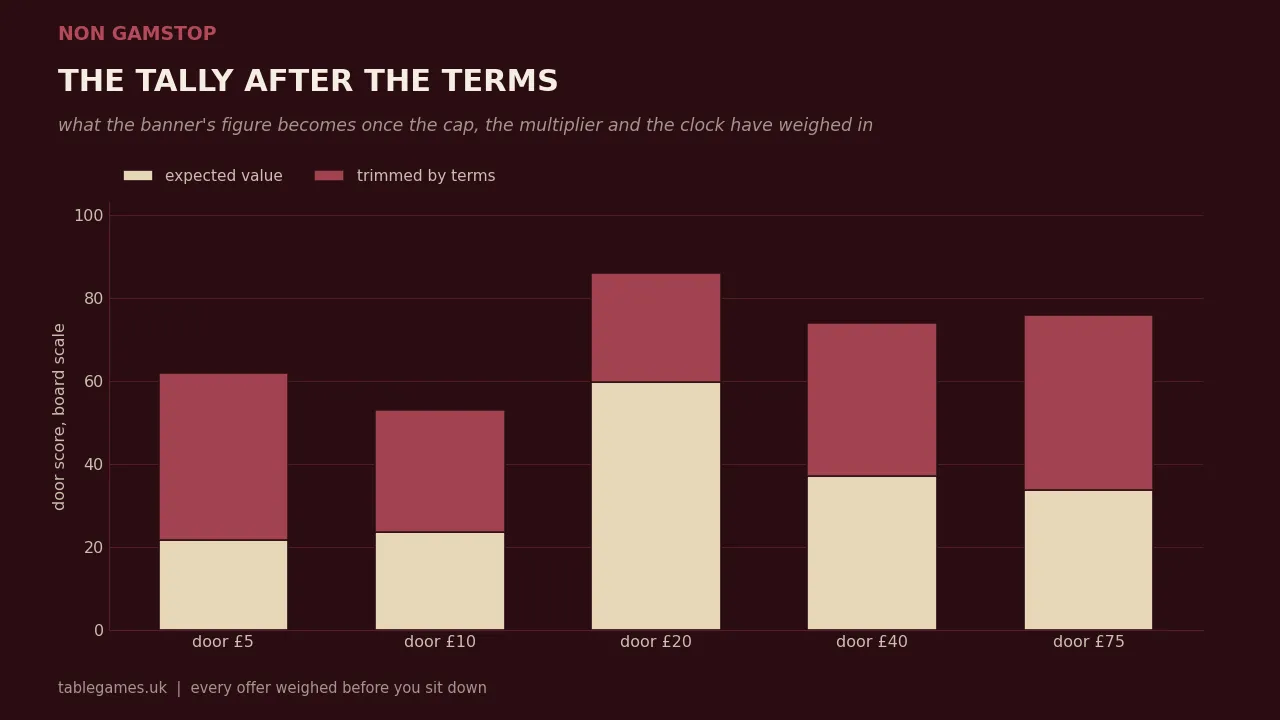
Do unused drops stack: where the rulebooks disagree
Here the two rulebooks part company. A room licensed in Britain works under a rulebook that expects offer terms to be set out clearly - expiry dates, drop sizes, end dates - and its calendars run as printed, with misses deleted and no accumulator credit implied. A room licensed offshore answers to the operator's own rulebook instead: the same questions - stacking, restoration, extensions - are settled by whatever the terms page says, and the terms page is the whole of the law there. The difference shows up in exactly the places a calendar is weakest: restoration, extensions and what counts as attendance.
The disagreement is practical, not decorative. Under a British rulebook a player can expect the printed schedule to bind the room; under an operator's own rulebook the printed schedule binds the room only as firmly as the operator chooses, and the default where terms are silent rarely favours the player. So the stacking question - do two unused drops roll into a double drop tomorrow? - is answered by reading the terms with the jurisdiction in mind, and assuming none where nothing is written. The habit costs one read and prices the whole question, whichever rulebook applies.
The rest of the rulebooks' disagreement runs down the same line: affordability checks that bind British licensees and do not travel; a self-exclusion register that covers British rooms and stops at offshore doors; card rules that differ on either side of the licence line. None of it changes what a day's drop pays. All of it changes what happens when the calendar and the player disagree - which is worth a minute of checking before the claim.
The calendar card: one day, multiplied honestly
A refill calendar prices in one line and multiplies in another. The day is the unit: drop size times stake box for face value, times the machine's payout fraction for expected return. Attendance is the multiplier, and it belongs to the player. Expiry, wagering and the stacking rule are the three lines that decide how much of the multiplication survives, and all three say from the terms in minutes. Nothing else on the promotional page moves the total.
One month, chalked day by day:
- Price one day: drop size times stake box times the machine's payout fraction.
- Count the days the routine will actually attend across the calendar's run.
- Chalk both clocks: the drop window and the date the calendar ends.
- Read the wagering multiple on daily winnings and time one day's clearing play.
- Check the stacking rule in the terms, and assume none where nothing is written.
Weighed that way, a daily spins offer is neither a headline nor a trick: it is a schedule with a price per attended day. Players whose routine already fits the calendar collect the multiplication for free; players whose routine does not are paying in deleted drops for a number they will never see. The card above prices that difference before the first drop lands. That is the whole job of a weigh card: to make a diary question answerable in figures before the calendar starts.
Frequently asked questions
How many spins land per day in practice?
Commonly ten to twenty five, hedged because each room sets its own drop, and the figure is printed in the terms, never on the banner. At twenty a day and a 10p box, one day carries £2.00 of face value. The headline's hundreds is that daily figure times the run's length, so the honest count of what will actually land is the drop multiplied by the days attended.
What stake do daily drops carry?
Commonly a fixed pence-per-spin box set by the room - 10p is the figure most often reached for, with some drops lower - and the box multiplies the whole calendar. Twenty drops at 5p carry £1.00 a day against £2.00 at 10p, a £30.00 difference across a thirty-day month on an identical headline. The terms line names the box; nothing else is authoritative.
What happens if I miss a day?
Deletion is the default: the drop's window closes, typically within a day of landing, and the day's face value and expected return leave the tally. At a 10p box that is £2.00 and about £1.92 a miss. Nothing restores it, no notice precedes it, and the calendar runs on. Whether any room makes exceptions is a terms question, and the safe assumption is that none does.
Do unused spins stack?
Assume none, and let the terms correct you. British-licensed rooms run the printed schedule with misses deleted, and offshore rooms settle the question by their own rulebook, where silence in the terms rarely favours the player. A stacking promise would be set out plainly if it existed, because it would change the offer's value materially - so its absence is itself the answer.
Is there wagering on daily winnings?
On many calendars yes, applied per day to whatever converts. £1.92 of expected winnings under a twenty times line asks £38.40 of play that day, and the requirement repeats with every attended day. Slot stakes commonly carry the full weight and table stakes little or nothing, hedged per room. Calendars without a line exist and convert daily winnings as cash, which is the cheapest shape to weigh.
When does the calendar stop?
On a stated end date in the terms, independent of attendance - the long hand of the clock. Some calendars run weeks, some a month, and a few renew, which restarts every rule on this page including expiry and wagering. The end date matters because it caps the multiplication: a calendar attended fully pays drop times days, and not a day more, whatever the headline implied.