PayPal Casinos: the Wallet Rail, Weighed
The wallet buys speed at the cashier and takes its price in the details. Weigh both directions of a PayPal rail before the first deposit goes down.
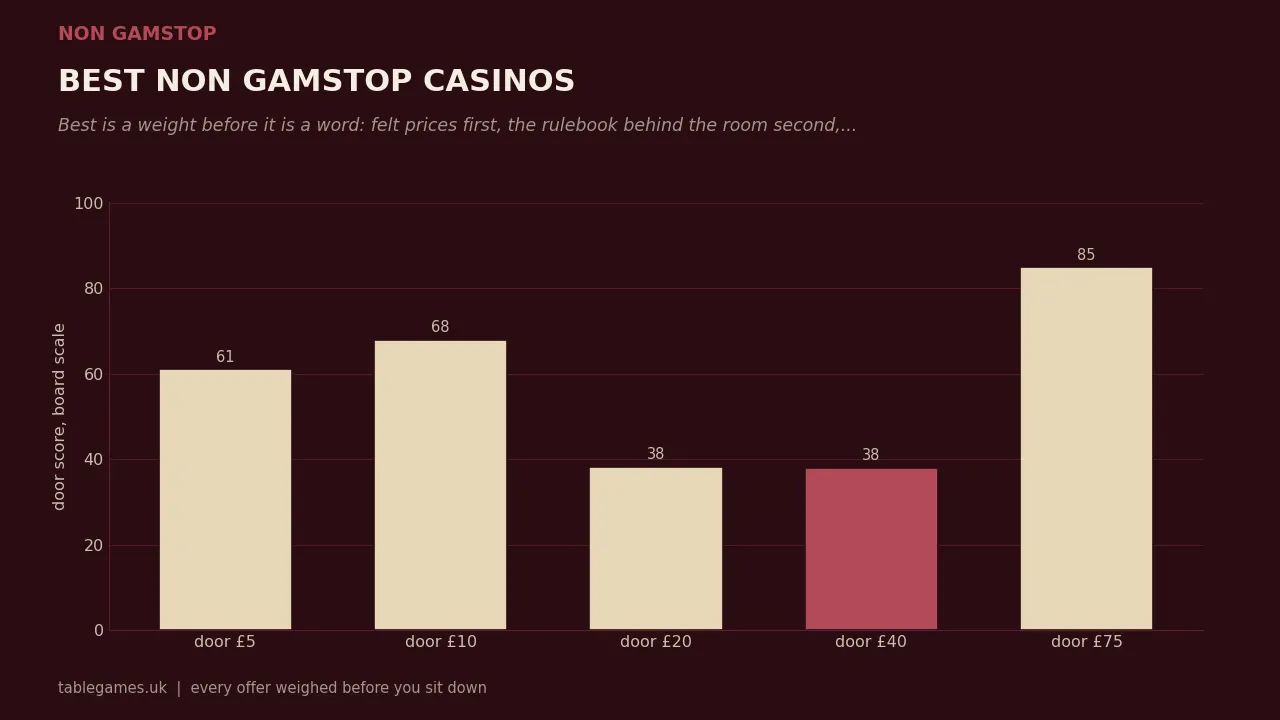
The table score
Four operators, weighed the way a croupier weighs a table: the entry price, the terms weight, the rails on offer, and how fast the cage pays. The scores are ours; the offers are quoted in the operator's own words.
Every card carries its table score out of 10 and four axis bars - licence, terms, payments and withdrawal. Offers move often - the operator's own page is always the current truth.

Welcome bonus €/£5,000 + 500 FS
Weigh the offer
Welcome pack €5,000 + 500 FS + €650 free bet
Weigh the offer
Casino welcome bonus 805% up to €6,400 + 280 FS
Weigh the offer
Welcome package 300% up to €/£1,000 + 150 FS
Weigh the offerCards appear in table-score order, the lower minimum deposit breaking ties. The bars visualise published figures, not a promise; nothing here is a recommendation to gamble, and the operator's own terms decide every claim.
What a PayPal casino changes at the cashier
The felt sets one cost and the cashier sets another, and a PayPal casino moves only the second. The pocket count on the wheel, the rate of a natural and the posted minimums are properties of the tables, unchanged by whatever rail funds them. What the wallet changes is the path: money moves from a funded PayPal balance, a linked bank account or a card on file, through PayPal's own machinery, to the room, without the card details ever being handed to the cashier. That middleman is the product, and it has a price worth chalking like any other.
The rail deserves the same seriousness as the tables, because it is the part of the receipt a player writes most often. A stake is placed once a session; a deposit is made every session, and the method behind it sets the pace, the record and the ceiling of every one. So the page runs like any other weigh-in on this site: figures first, adjectives last, and every number tied to a document a player can open - the cashier page, the wallet's own fee schedule, the statement at month end - rather than to a promise made on a banner.
The convenience is real and specific. Deposits clear at a tap, the room never stores card numbers, and the statement shows a single wallet line rather than a scatter of gambling names - hedged, because statement conventions vary by bank. For players who keep a separate email or budget pot for play, the wallet draws a clean ring around the spending, which is a discipline feature as much as a privacy one. The tally is legible in one place, on one line, every month.
One line of context belongs before the detail. Most rooms listing PayPal to British players are licensed outside Britain rather than in it, and the licence page of any room on the board above states that fact plainly. Everything after this paragraph is rail arithmetic, and rail arithmetic is the same whichever way that particular figure reads.
Two directions: what the wallet does to a payout
Deposits are the wallet's headline: near-instant in most cases, with the balance live before the kettle boils. Withdrawals are where the reading gets careful, because the two directions are not always symmetric. A room that takes PayPal deposits commonly pays back out to the same wallet, but not universally - some operators accept the wallet at the door and settle winnings by bank transfer instead, and the difference only shows on the day a payout falls due.
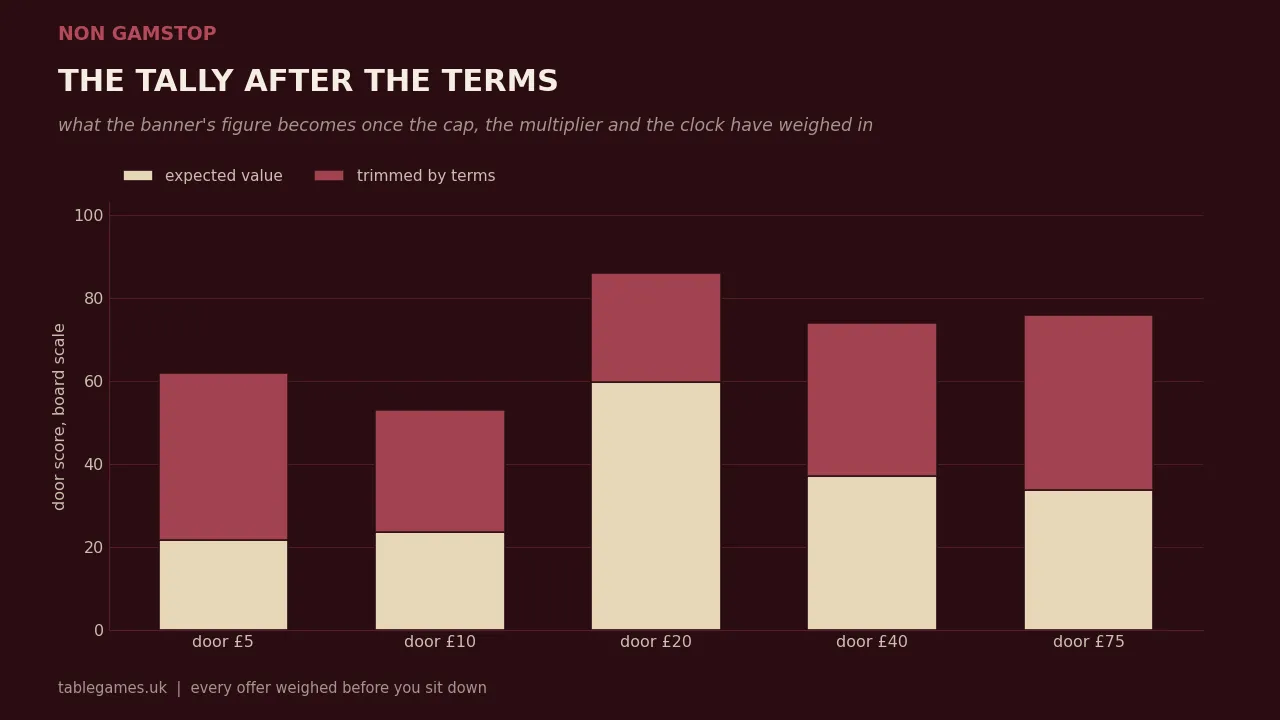
The asymmetry is checkable in advance, which is what makes it a figure rather than a surprise. The cashier page lists both directions for every rail it supports, and reading both before the first deposit takes two minutes. what shortens a payout queue carries the timing side of that read: the room's pending window, the method's own speed, and the identity papers that commonly attach to a first withdrawal. Price the way out with the way in, or the way out will price itself at the worst moment.
Where the wallet does carry payouts, it is commonly among the quicker methods a room offers, because the destination is already on file and no bank intermediary sits in the path. Where it does not, the honest plan is to name the bank route on day one and keep the details current, so a win is claimed by an account that exists rather than improvised on the night. Both cases are settled by the same document: the room's own payments page.
Paypal casino at a glance
- Entry price£40 typical
- Wagering45x on bonus
- Payout window1–3 working days
- Payments4 rails incl. e-wallet
The price of the convenience: fees, caps and the ring
Wallets charge in quieter ways than rooms do. Deposits from a player to a room are commonly free on the room's side; the wallet's own funding method is where a fee can enter, since topping a PayPal balance by card or exchanging currency carries costs set by PayPal rather than by the room. Currency conversion is the classic one: a wallet funded in pounds paying a room that settles in euros takes a spread on the exchange, and that spread repeats on every conversion, both ways.
Caps are the second line. Some rooms bound wallet transactions below their card ceilings, some set daily figures, and some treat the wallet exactly like any other rail; the cashier page states which. For a table player the cap matters less than at a high-roller cage - a £2 blackjack minimum and a £60 float sit well inside most ceilings - but the figure belongs on the card anyway, because the session a player plans and the ceiling a room posts should meet before the deposit, not after.
The ring is the third line, and it is the wallet's quiet contribution to discipline. A separate funding source - a debit card kept for play, a balance topped up deliberately - makes the monthly tally a single legible line rather than a scatter of charges. Players who fund the wallet from a credit source, on the other hand, have simply moved the borrowing one step back, and the ring becomes a curtain rather than a boundary. The rail is a tool; the funding method is the decision.
The stake boxes the wallet feeds
Minimums and maximums are posted per table and per room, and the wallet inherits them unchanged. RNG tables usually deal from under £1 a round, live minimums commonly run from about 50p to £10, and the ceiling is printed on each table's own panel. A £60 float therefore buys 60 rounds at a £1 RNG minimum, or 30 at a £2 live blackjack table, and the wallet's part in that arithmetic is precisely nil.
Pace turns the float into time. A live blackjack shoe dealing 50 to 70 hands an hour empties a £60 float at £2 a hand in roughly half an hour of shoe; the same float at an RNG table at £1 a round, running to hundreds of rounds an hour, covers a similar stretch of wall clock at a fraction of the turnover. Same wallet, same float, very different hour - which is the comparison time-at-a-stake always wins over headline speed.
The wallet also feeds the bonus boxes, and there the read is the weighting rather than the rail. Table wagers are commonly counted at a fraction of face value toward wagering requirements - anything from nothing to 10 per cent in offshore terms - while slots commonly count in full. A wallet deposit claimed against a table-weighted bonus runs the same arithmetic as any other deposit; the rail neither improves nor worsens the figure, and the terms page remains the only source worth quoting.
| Brand | Welcome offer | Wagering | Min dep. | Withdrawal | Payments | Licence | Table score | Terms |
|---|---|---|---|---|---|---|---|---|
| BoyleSports | Bet £10 get £30–£40 (typical) | 30x–40x by productbest | £10+5 | 1–3 working days+3d | Visa · PayPal · Paysafecard · Bank transfer-1 rails | UKGC | 8.2 / 10 | Check the terms first |
| Mega Casino | Matched deposit up to £/€200 (typical) | 30x–40x by productbest | £10+5 | 1–3 working days+3d | Visa · Mastercard · Skrill · Apple Pay-1 rails | UKGC | 8.2 / 10 | Check the terms first |
| LiveScore Bet | Matched deposit up to £/€200 (typical) | 35x typical+5x | £5–£10best | 1–3 working days+3d | Visa · Mastercard · PayPal · Bank transfer-1 rails | UKGC | 7.8 / 10 | Check the terms first |
| Velobet | 100% up to €/£1,000 + spins (typical range) | 30x–45x by gamebest | €10 equivalent+5 | Instant–24h on cryptobest | Bitcoin · Litecoin · Visa · Bank transfer-1 rails | Offshore | 6.8 / 10 | Check the terms first |
| Parimatch | Matched welcome up to €/£300 (typical) | 30x typicalbest | €20+15 | 1–3 working days+3d | Visa · Mastercard · Trustly · Bank transfer-1 rails | Offshore | 6.4 / 10 | Check the terms first |
| JackpotCity | 100% up to €/£100 + 50 spins (typical) | 30x typicalbest | €10–€20+5 | 2–5 working days+5d | Visa · Mastercard · Trustly · Bank transfer-1 rails | Offshore | 5.9 / 10 | Check the terms first |
| Ladbrokes | £30–£50 bingo bonus on £10–£20 (typical) | 40x bonus / 2x bingo+10x | £10+5 | 24–48h e-wallets+48d | Visa · PayPal · Skrill · Bank transfer-1 rails | UKGC | 5.9 / 10 | Check the terms first |
| Gamdom | Matched deposit up to €/£500 + spins (typical) | 40x typical+10x | €10 equivalent+5 | Under 24h on crypto+24d | USDT · BTC · ETH · TRX · Visabest | Offshore | 4.5 / 10 | Check the terms first |
| Rolletto | 150% match + rakeback (typical range) | 35x typical+5x | €10 equivalent+5 | 24–48h (crypto fastest)+48d | Bitcoin · Litecoin · Visa · Bank transfer-1 rails | Offshore | 4.5 / 10 | Check the terms first |
| Roobet | Matched deposit up to €/£500 + spins (typical) | 35x typical+5x | €10 equivalent+5 | Under 24h on crypto+24d | BTC · ETH · USDT · MuchBetter-1 rails | Offshore | 4.5 / 10 | Check the terms first |
| Rainbet | Crypto match up to 1 BTC equivalent (typical) | 40x typical+10x | €20 equivalent+15 | Under 24h on crypto+24d | BTC · ETH · USDT · MuchBetter-1 rails | Offshore | 4.1 / 10 | Check the terms first |
| NineWin | Matched deposit up to €/£500 + spins (typical) | 45x typical+15x | €10–€20+5 | 24–48h (crypto fastest)+48d | BTC · ETH · USDT · MuchBetter-1 rails | Offshore | 3.8 / 10 | Check the terms first |
The wallet against the other rails, weighed
Against a debit card, the wallet's edge is distance: card details stay at PayPal, the statement shows one line, and a dispute starts with the wallet rather than the bank. Against a prepaid voucher, the wallet's edge is flexibility - vouchers bound the spend by design, while the wallet bounds it only through the funding method behind it. Against phone billing, the wallet's edge is headroom, since phone rails commonly carry small daily caps by design.
The older e-wallets sit closest in shape, and how the older wallets weigh in walks that family's own trade-offs, from fees to payout handling. The honest ranking across all of them is decided by two figures rather than any brand: what the rail costs both ways, and whether it carries the payout as well as the deposit. A wallet that wins on speed but fails on the return journey is only half a rail, and half-measures at the cashier are how payout surprises are manufactured.
One habit settles the ranking faster than any comparison chart. Pick the two figures that matter for the plan - cost both ways, payout capability - and read them off each rail's own page before the first deposit. Every method on the board above survives that read; the ones that price badly drop themselves. A rail chosen this way is chosen for a session's actual shape rather than for a logo, and the choice takes ten minutes that never has to be repeated.
Bank transfer and coin rails bracket the family at the slow and fast ends, and each brings its own paperwork - the bank for legibility, the coin for a conversion card of its own. None of the alternatives changes a single number on the felt, which is worth stating once and plainly: the choice of rail is a cashier decision, priced in minutes and fees, and the tables will never know which one carried the money in.
Buyer protection and the gambling receipt
PayPal's purchase protections are built for goods that arrive and services that perform, and gambling outcomes commonly sit outside them - hedged, because the wallet's own terms govern the detail. A losing bet is not a failed delivery, and the dispute tools that recover a parcel do not recover a stake. Any player reading the wallet's protections as a backstop for losses should read the wallet's own terms before relying on the assumption.
What the protection machinery does cover, in many cases, is the unauthorised: a payment the player did not make, an account taken over, a charge that never should have left. Those routes are real and worth knowing, but they are about the integrity of the rail rather than the results of the play, and the two are easily confused in marketing. The receipt a player should keep is the room's: deposits, timestamps, balance screenshots, terms as they read at sign-up.
That file earns its keep at any disagreement, whatever the rail. A payout argued with dates and reference numbers moves faster than one argued with adjectives, at any room on the board. The wallet adds one more document to the folder - the PayPal transaction record, which pairs each room charge with a date and a reference - and one more line in the player's favour when the record needs to speak for itself.
The card to chalk before the wallet moves
Five checks settle the wallet question in one sitting, and all of them are reads rather than paperwork. Whether the rail runs both ways at the room in question. What the funding method behind the wallet costs. Whether the room caps wallet transactions. What the statement will show, and under which name. And what the payout window looks like when the wallet is the destination. Carded, the rail prices itself in minutes; skipped, the first payout supplies the figures instead.
Chalked before the first wallet deposit:
- Confirm on the cashier page that PayPal carries withdrawals as well as deposits.
- Price the funding method behind the wallet, including any currency spread.
- Check the room's caps for wallet transactions against the float planned.
- Name the payout route on day one, with account details kept current.
- Keep the PayPal record beside the room's receipts in one dated file.
- Fund the wallet from money held, never from a credit line.
The wallet's promise is a shorter queue at the door and a cleaner line on the statement, and both promises are kept when the funding method is honest and the cashier page has been read. Neither promise touches the odds on the felt, which is as it should be: a rail is transport, not an edge, and the best thing a cashier decision can ever be is boring. Price it, chalk it, and the wallet does its one job quietly.
Frequently asked questions
Are PayPal deposits instant?
Commonly, yes: a wallet deposit credits within moments of the tap, and the balance is playable at once. Hedged, because the room's own processing can add a pause, and a wallet funded from a bank transfer rather than a card or balance takes the bank's timeline first. The near-instant figure applies to the room hop, not to the funding hop, and the two are separate steps with separate clocks.
Can I withdraw to PayPal?
At many rooms, yes; at some, no. The pattern worth knowing: a room that accepts wallet deposits commonly supports wallet payouts, but a minority take the wallet at the door and settle winnings by bank transfer only. The cashier page lists both directions for each rail it supports, and it is the only document worth trusting on the question. Read it before the first deposit, while the answer still changes the plan.
Does PayPal charge for casino deposits?
The room's side is commonly free, and the wallet's own charges depend on how the wallet is funded. Topping up by card, holding a balance in another currency, or converting between currencies all carry costs set by the wallet, and a spread on exchange repeats both ways. For a player funding in pounds and playing in pounds, the usual bill is zero; for anyone converting, the spread belongs on the card beside the room's own terms.
Will gambling show on my bank statement?
The bank sees a charge to the wallet, and the wallet's own record shows the room - so the bank statement commonly stays generic while the PayPal activity log carries the detail. Conventions vary by bank and by wallet setup, which is why the claim is hedged. Players who want the ring drawn tightly keep the funding source separate, which makes the wallet the single point where the gambling line appears, in one place rather than a scatter.
Is PayPal safer than a debit card at a casino?
Safer is the wrong shape for the question; the two rails differ in what they expose. The wallet keeps card details out of the room and centralises the record, which is a genuine reduction in exposure at the cashier. The protections that cover undelivered goods commonly do not reach gambling outcomes, so neither rail recovers a losing stake. Price the rails on speed, fees and record-keeping, and keep the safety language for the unauthorised-payment cases it was built for.
Why do some rooms take PayPal for deposits only?
Cashier setups are the room's own, and wallets are among the rails rooms treat asymmetrically: cheap and quick at the deposit end, subject to their own requirements at the payout end. Whatever the operator's reason, the practical answer is the same - the cashier page states which rails carry payouts, and the payout route should be named before the first deposit rather than discovered at the first win. A deposit-only rail is fine once the way out is planned.