300% Deposit Bonus: the Price of the Multiple
Three times the deposit reads like a price; it is a line of credit with a multiplier. Weigh both per pound before sitting down.
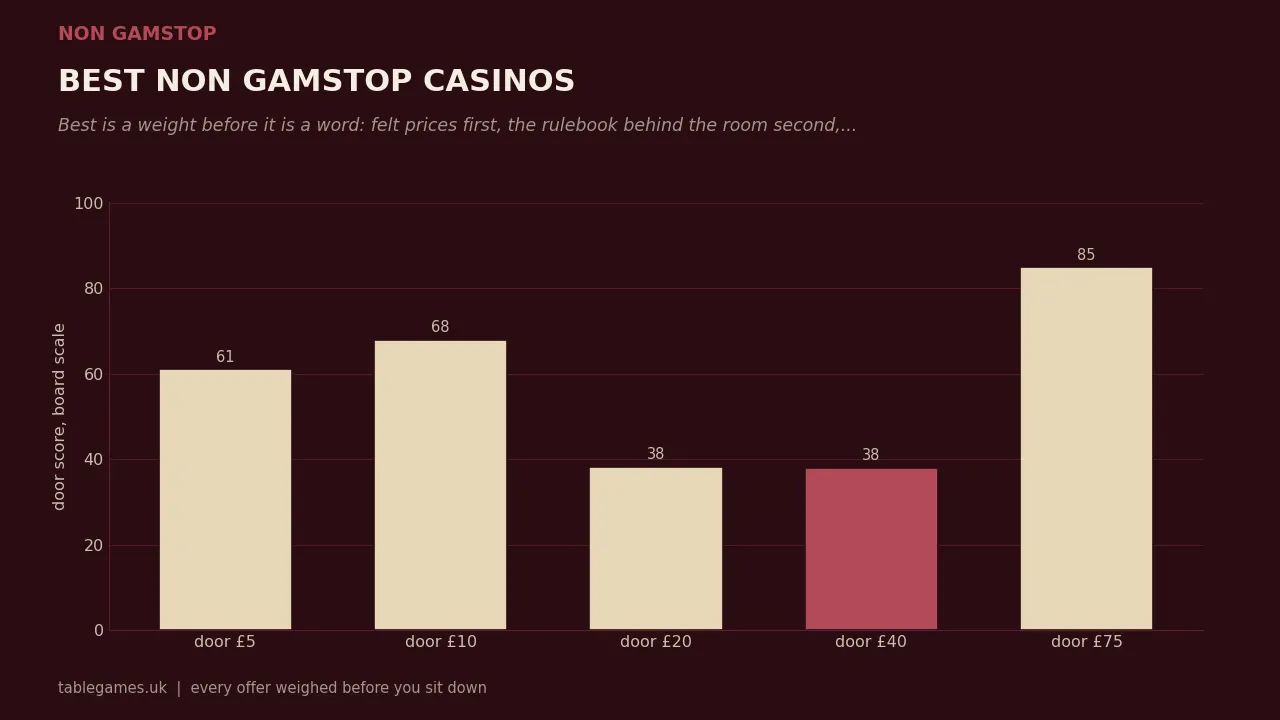
The table score
Four operators, weighed the way a croupier weighs a table: the entry price, the terms weight, the rails on offer, and how fast the cage pays. The scores are ours; the offers are quoted in the operator's own words.
Every card carries its table score out of 10 and four axis bars - licence, terms, payments and withdrawal. Offers move often - the operator's own page is always the current truth.

Welcome bonus €/£5,000 + 500 FS
Weigh the offer
Welcome pack €5,000 + 500 FS + €650 free bet
Weigh the offer
Casino welcome bonus 805% up to €6,400 + 280 FS
Weigh the offer
Welcome package 300% up to €/£1,000 + 150 FS
Weigh the offerCards appear in table-score order, the lower minimum deposit breaking ties. The bars visualise published figures, not a promise; nothing here is a recommendation to gamble, and the operator's own terms decide every claim.
What does a 300% match book per pound?
A 300% match is a rate, and the rate reads four pounds of balance for every pound deposited: £1 in, £3 of credit beside it, £4 to play with. The price the banner sells is the £3. The price the terms collect sits behind the credit, in a multiplier that turns the £3 into counted turnover before any of the £4 is allowed to leave. Weigh both prices per pound and the offer reads plainly: what the pound buys, and what it owes.
Per pound is the fair unit because the rate scales cleanly. Deposit £10 and the credit is £30, the balance £40, and at a commonly quoted multiplier of forty-five times the bonus the counted line is £1,350. Per deposited pound: £3 of credit, £4 of balance, £135 of counted turnover. The last figure is the one banners never print, and it is the figure that decides whether the match is a price or a poster. Everything else on this page is that figure unpacked.
A deposit is real money in a way no-deposit credit is not, so the weigh-in runs in both directions at once. £4 of balance for £1 staked is a genuine improvement on the layout, and it is the improvement the banner advertises. £135 of counted turnover for the same £1 is a debt booked against it, and it is the debt the terms page collects. Both lines are true simultaneously, and the distance between them is the whole offer.
The ladder holds at every rung, which is the useful part of the per-pound view. A £5 deposit at the same 300% line books £15 of credit and, at forty-five times, £675 of counted turnover. A £20 deposit books £60 and £2,700 counted. A £50 deposit books £150 and £6,750 counted. The counted line is always one hundred and thirty-five times the money actually put in, and the stake box, the fraction and the clock stay roughly where they were, so the bigger the deposit, the more the meter outweighs the balance it sits behind.
The ladder holds at every rung, which is the useful part of the per-pound view. A £5 deposit at the same 300% line books £15 of credit and, at forty-five times, £675 of counted turnover. A £20 deposit books £60 and £2,700 counted. A £50 deposit books £150 and £6,750 counted. The counted line is always one hundred and thirty-five times the money actually put in, and the stake box, the fraction and the clock stay roughly where they were, so the bigger the deposit, the more the meter outweighs the balance it sits behind.
The multiple against the multiplier: two different prices
The multiple and the multiplier are two different prices wearing similar clothes, and the first job is to tell them apart. The multiple, three hundred per cent, sets what arrives: £3 of credit per pound deposited, once, on the day. The multiplier, commonly thirty-five to fifty times on bonus credit, sets what must be staked before anything leaves, and it collects on every round until the meter clears. An offer is sold by the first price and judged by the second.
Worked at forty-five times, the two prices meet on a single line: £1 deposited buys £3 of credit and owes £135 of counted turnover, which is £45 owed for every £1 of credit taken. Push the multiplier to fifty times and the owed line reaches £150 per pound deposited. Cut it to thirty-five and the line falls to £105. The multiple never moves, because three hundred is three hundred, and the price of the offer swings by half on the multiplier alone.
That swing is the reason the multiple is the wrong figure to shop by. Two rooms can chalk the same 300% on the board above and run prices half a part: one at thirty-five times, one at fifty. The banner cannot tell them apart and the terms page can, in one line. Read the multiplier first and the multiple second, and the board reorders itself by the only figure that ever collects.
300% deposit bonus at a glance
- Entry price£20 typical
- Wagering45x on bonus
- Payout window1–3 working days
- Payments4 rails incl. e-wallet
The table fraction: what credit is allowed at the tables
The table fraction is the weighting: the share of a table stake the meter accepts. On bonus credit the weighting usually runs from a tenth down to nothing, and live tables are the most frequent exclusions of all. At a tenth, the £1,350 counted on a £10 deposit needs £13,500 staked at the felt; at nothing, the felt never shifts the line by a penny. The fraction, not the multiple, decides whether a layout player can clear the offer at all.
The fraction also prices the games inside the offer. Roulette at a tenth asks the same £13,500 of stakes whether the wheel is single-zero or double-zero, while the edge runs at 2.70 per cent on the first wheel and 5.26 per cent on the second: the house's take doubles and the meter crawls at the same rate either way. Blackjack on a properly priced table carries the smallest edge on the floor, which makes it the cheapest place to carry a weighting, where the terms allow the felt a share at all.
Where the weighting excludes the tables outright, the honest reading is that this is not a table offer: the credit plays, the felt decorates. The terms page names the weighting game by game, commonly in a small table of its own, and one read of it sorts the offer in a minute. A player who skips the fraction and clears the line on slots has run a slot offer with a table ride attached.
Stake boxes on the credit: the maximum bet line
The stake box on credit is the maximum bet line, and it is the smallest figure anywhere on the terms page and carries the largest consequence. Commonly set at £5 on offers of this size, lower on some terms, the box voids the credit and the winnings with it when a round exceeds the line. At £5 a round, the £13,500 of felt stakes a tenth weighting calls for is 2,700 rounds, and 2,700 rounds is the honest unit of the clearing.
Hours follow the layout. A live blackjack table, dealing at the pace commonly quoted near sixty hands an hour, needs forty-five hours at the rail for 2,700 hands, while a random-number table running several hundred rounds an hour compresses the same count toward nine. The box sets the stride, the layout sets how many strides fit in an evening, and the clock in the next section sets how many evenings exist. Three lines between them price the whole offer.
welcome offers weighed per pound deposited keeps the same box discipline across the whole class of deposit matches, and the discipline is the point. The box is read before the deposit because a voided money after a winning run is the most expensive line in bonus play. Rounds, pace, evenings: the box converts all three, and reading it is a single line's work on the terms page. The strictest line in the document is usually the least advertised.
| Brand | Welcome offer | Wagering | Min dep. | Withdrawal | Payments | Licence | Table score | Terms |
|---|---|---|---|---|---|---|---|---|
| Duelz | Bet £10 get £30–£40 (typical) | 30x–40x by productbest | £5–£10best | 24h e-wallets, 2–5 days cards+5d | Visa · Mastercard · PayPal · Bank transfer-1 rails | UKGC | 7.7 / 10 | Check the terms first |
| Hollywoodbets | 100% up to £/€100 + spins (typical) | 40x typical+10x | £5–£10best | 1–3 working days+3d | Visa · Mastercard · Skrill · Apple Pay-1 rails | UKGC | 7.5 / 10 | Check the terms first |
| Tote | £30–£50 in free bets (typical range) | 35x typical+5x | £10–£20+5 | 24h e-wallets, 2–5 days cards+5d | Visa · Mastercard · Neteller · Pay by mobile-1 rails | UKGC | 7.4 / 10 | Check the terms first |
| Kinghills | Crypto match up to 1 BTC equivalent (typical) | 30x–45x by gamebest | €10 equivalent+5 | Instant–24h on cryptobest | Bitcoin · USDT · Visa · Mastercard-1 rails | Offshore | 6.8 / 10 | Check the terms first |
| 7bet | Matched deposit up to £/€200 (typical) | 30x–40x by productbest | £5–£10best | Under 24h e-wallets+24d | Visa · Mastercard · PayPal · Bank transfer-1 rails | UKGC | 6.6 / 10 | Check the terms first |
| Mystake | 100% up to €/£1,000 + spins (typical range) | 35x typical+5x | €20 equivalent+15 | Under 24h on crypto+24d | USDT · BTC · ETH · TRX · Visabest | Offshore | 4.9 / 10 | Check the terms first |
| Boneenbet | 100% up to €/£1,000 + spins (typical range) | 35x typical+5x | €10 equivalent+5 | 24–48h (crypto fastest)+48d | Bitcoin · Litecoin · Visa · Bank transfer-1 rails | Offshore | 4.5 / 10 | Check the terms first |
| Gamdom | Matched deposit up to €/£500 + spins (typical) | 40x typical+10x | €10 equivalent+5 | Under 24h on crypto+24d | USDT · BTC · ETH · TRX · Visabest | Offshore | 4.5 / 10 | Check the terms first |
| Rolletto | 150% match + rakeback (typical range) | 35x typical+5x | €10 equivalent+5 | 24–48h (crypto fastest)+48d | Bitcoin · Litecoin · Visa · Bank transfer-1 rails | Offshore | 4.5 / 10 | Check the terms first |
| Roobet | Matched deposit up to €/£500 + spins (typical) | 35x typical+5x | €10 equivalent+5 | Under 24h on crypto+24d | BTC · ETH · USDT · MuchBetter-1 rails | Offshore | 4.5 / 10 | Check the terms first |
| Donbet | Matched deposit up to €/£500 + spins (typical) | 40x typical+10x | €10 equivalent+5 | 24–48h (crypto fastest)+48d | Bitcoin · USDT · Visa · Mastercard-1 rails | Offshore | 4.1 / 10 | Check the terms first |
| Fat Pirate | Crypto match up to 1 BTC equivalent (typical) | 45x typical+15x | €20 equivalent+15 | 24–48h (crypto fastest)+48d | Bitcoin · Litecoin · Visa · Bank transfer-1 rails | Offshore | 3.8 / 10 | Check the terms first |
The clock on the multiple and the exit line
The clock on a deposit match commonly runs thirty days, sometimes fewer, and the exit line is where the tally is finally read: what the balance shows once the meter clears, and what the cage needs before it moves. The counted turnover on a £10 deposit at forty-five times is £1,350; at a £5 box and random-number pace that is nine hours of table time, which fits a thirty-day clock at two evenings a week with room to spare. The pace is rarely the problem on a deposit match. The weighting is.
The exit line deserves its own read because the credit itself commonly never leaves. Bonus money converts to withdrawable balance only as the meter accepts, and a good number of terms deduct the bonus amount at the cage or cap what the credit may release. Which of the three readings applies sits in the terms page's withdrawal section, and the difference between the readings is measured in real pounds at the moment of withdrawal. It is read before the deposit, like every other line.
One sentence of rulebook belongs on this card. Offers pitched at multiples like this are commonly written on offshore licences, which sit outside British supervision from the first deposit. That line does not change the arithmetic, because the meter runs the same either way. It changes who answers when the meter is disputed, and it is priced into the weighing rather than discovered after it. The rest of the card is arithmetic; this line is the referee.
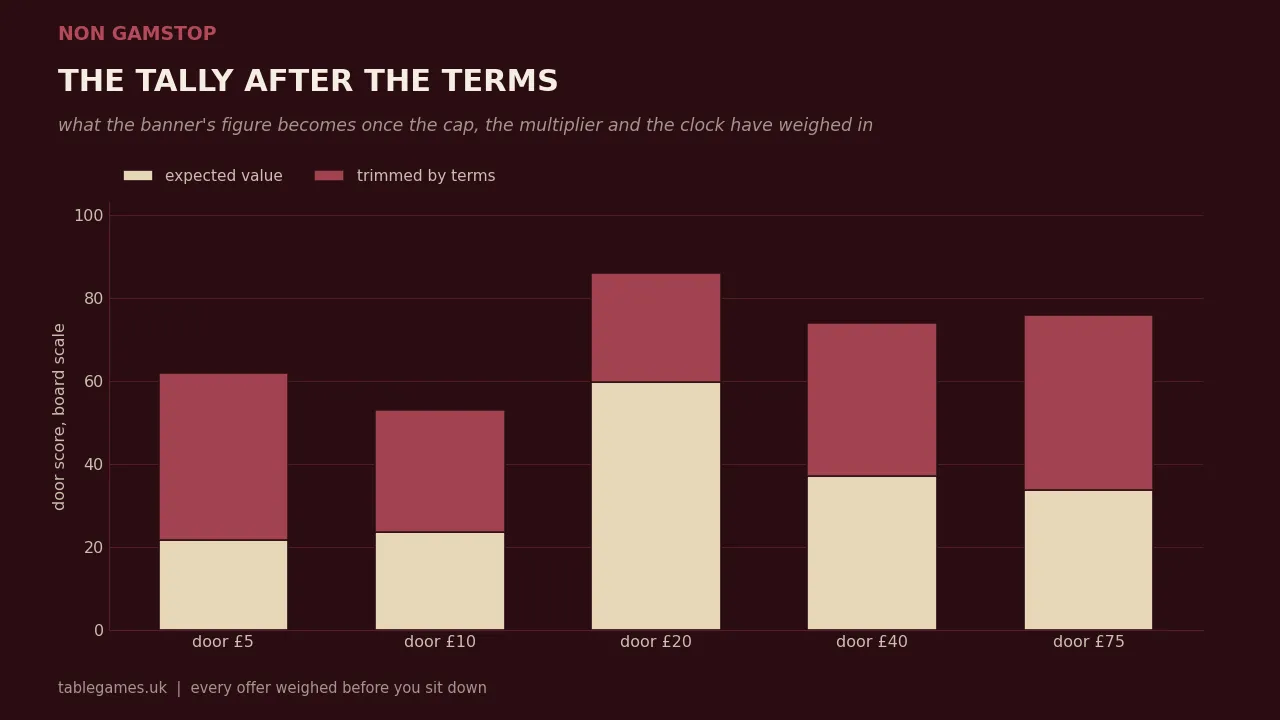
Weighing 300% against the 200 and the 400 next door
The neighbours frame the price. A 200% match books £2 of credit per pound, which at forty-five times is £90 of counted turnover per pound deposited. A 400% match books £4, which is £180. The 300 sits between at £135. The multiple climbs and the owed line climbs with it, pound for pound, because the multiplier attaches to the credit and the credit is the thing the multiple sets. The ladder is arithmetic all the way up.
What does not climb evenly is the chance of clearing. The stake box stays on the same £5 line across the three offers in many cases, the clock stays at the same thirty days, and the rounds double from the 200 to the 400 while the evenings available do not. the two hundred per cent neighbour clears at an hour count the 400 cannot match at the same pace, and the 300 splits the difference exactly as its multiple suggests.
The 400's extra pound of credit per pound deposited is real money, and for a player who would clear either offer at a canter it is the better price. For a player clearing at the edge of the clock, the extra credit is extra distance, and the 200 wins by finishing. The right multiple is the one whose counted line fits the evenings actually available, which is why the per-pound row is computed before the deposit row is admired.
Chalked in hours, the three rungs sort themselves. At the same £5 box and a tenth fraction, the 200's £900 counted line asks £9,000 of felt stakes, 1,800 rounds, six hours at random-number pace. The 300's £1,350 asks 2,700 rounds, nine hours. The 400's £1,800 asks 3,600 rounds, twelve. Three offers, one evening budget: the rung that fits is decided by the hours available, not by the ambition on the banner.
The weigh card: the multiple in four figures
Four figures carry any 300% offer, all taken from the terms page before the deposit clears: the credit the multiple books per pound, the multiplier that prices it, the fraction the tables are allowed, and the box that paces it. Worked at the multiplier and box most terms choose, the card comes out as below, and it scales cleanly, because every figure on it moves in proportion with the deposit.
The multiple in four figures, per £10 deposited:
- credit booked: £30 at the 300% line, £40 of balance against £10 of real money
- multiplier: commonly forty-five times the bonus, £1,350 counted before anything unlocks
- table fraction: a tenth or less in many cases, £13,500 staked at the felt at a tenth
- stake box: £5 common on credit, 2,700 rounds, nine hours at random-number pace
Read together, the four numbers say what the banner cannot: a 300% match is a £30 price attached to a £1,350 meter, clearable at the felt only if the fraction allows and the box and the clock permit. Where all four lines fit the evenings actually available, the multiple is a genuine price and the balance at the end is real. Where one line fails, the credit is scenery, and the four-figure card is what shows it before the deposit rather than after.
Frequently asked questions
Is a 300% match worth four times the deposit?
It is worth four times the deposit as balance and considerably less as withdrawable money. The £4 of balance per £1 includes £3 of credit that usually converts only as the multiplier clears, and some terms deduct the bonus number at the cage. Priced as balance, yes; priced as money that leaves, the figure depends on the multiplier, the table fraction and the clock, which are the three lines this page weighs.
What turnover does the multiplier book?
At forty-five times a £30 credit, £1,350 of counted turnover on a £10 deposit. Multipliers commonly run thirty-five to fifty times on offers of this size, which puts the counted line between £1,050 and £1,500 for the same deposit. The counted figure is turnover rather than stake: with the tables weighted at a tenth the same line means £13,500 at the felt, and that is the figure a table player should chalk.
Can tables clear the wagering?
Only where the weighting allows. Most terms credit the felt with a tenth of the counted turnover at best, and a good number bar live tables altogether, so table play moves the meter slowly or not at all. Where a tenth applies, the counted line asks ten times its figure in real stakes, £13,500 for £1,350 counted, which is an hours question that the stake box and the clock then settle. Read the weighting before planning any clearing route.
What maximum bet applies on credit?
Commonly £5 on offers of this size, though the line moves room by room and a few terms set it lower. Every round above the box risks voiding the credit and the winnings attached to it, which makes the box the strictest line on the terms page. At £5 a round the clearing arithmetic runs in rounds, 2,700 for the worked example, and the box is what converts pounds into evenings.
What happens to the multiple at withdrawal?
The credit commonly converts as the meter accepts rather than at the cage, but some terms deduct the bonus figure from the withdrawing balance or cap what the credit may release. All three readings exist across this class of offer, and the difference between them is real money at the cage. The exit rules sit in the terms page's withdrawal section, and they are read before the deposit like every other line.
Who suits a high multiple?
Players with the evenings to carry it: an hour or two at random-number pace several times a week inside the clock, with the clearing treated as a settled routine rather than a sprint. Table punters need the weighting run first, because a tenth fraction or an outright exclusion turns the offer into a slot affair. Anyone treating the multiple as the price should re-price per pound, because the multiple never changes and the price always does.