Online Bingo: the Ticket, the Prize Fund, the Price
A ticket is a stake and a prize fund is the pot it feeds. The gap between them is the price, and it is chalked here.
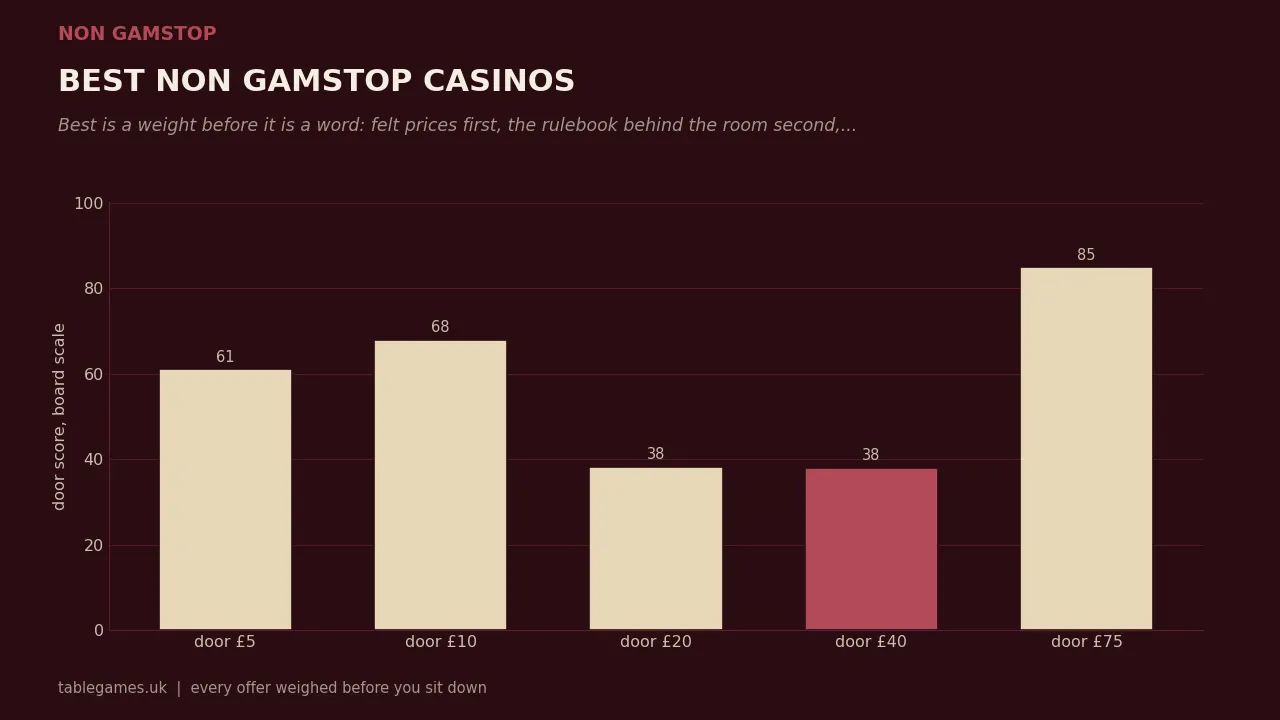
The table score
Four operators, weighed the way a croupier weighs a table: the entry price, the terms weight, the rails on offer, and how fast the cage pays. The scores are ours; the offers are quoted in the operator's own words.
Every card carries its table score out of 10 and four axis bars - licence, terms, payments and withdrawal. Offers move often - the operator's own page is always the current truth.

Welcome bonus €/£5,000 + 500 FS
Weigh the offer
Welcome pack €5,000 + 500 FS + €650 free bet
Weigh the offer
Casino welcome bonus 805% up to €6,400 + 280 FS
Weigh the offer
Welcome package 300% up to €/£1,000 + 150 FS
Weigh the offerCards appear in table-score order, the lower minimum deposit breaking ties. The bars visualise published figures, not a promise; nothing here is a recommendation to gamble, and the operator's own terms decide every claim.
What does online bingo cost per ticket?
The unit of stake at bingo is the ticket, and the ticket is the whole price in one object: a stake printed at the top of the room, a prize fund it feeds, and a draw that decides who collects. Ticket prices commonly start at pennies and rise with the room, the game and the guaranteed pot behind the board. Whatever the figure, the arithmetic is the same as any table's: what goes in, what comes back across the room as a whole, and the gap between the two.
The gap is harder to see than at a wheel, and that is the game's central honesty problem. A roulette layout prints its paid odds on the felt; a bingo room rarely prints what share of ticket sales returns as prizes. Some boards name a guaranteed pot against a ticket price, which is a readable figure; others allocate prizes per game without a published return, which is not. Where the figure is missing, the honest assumption is that the gap sits near the wider market's and is nobody's promise.
The weighing rule follows: prefer the room that publishes its numbers. A guaranteed pot divided by the tickets a room expects to sell is a real price a player can compute; a jackpots-first advert without figures is not. Bingo is not dishonest by shape - the ticket simply hides its arithmetic better than a wheel does, and the clerk's answer is to ask for the figures the room actually posts before the first card is bought.
The rooms: 90-ball, 75-ball and the shapes between
The British market plays two main shapes. The 90-ball game deals tickets of fifteen numbers across three rows, with prizes for the single line, the two lines and the full house in ascending order; the 75-ball game plays a five-by-five card with patterns called per game. Both are hosted games with a caller, a room of players and a prize split that depends on how many tickets are in play. Neither shape carries a house edge printed on the ticket, so the room's own published figures carry the weight.
Around the hosted games sits the wider lobby. Speed bingo compresses the draw into seconds; themed rooms run the same 90 or 75 balls behind a seasonal name; and the side games - reels, instant wins and table games - share the same balance and the same room. The side games are where a bingo balance can drift, and where the side games sit in the lobby weighs that floor in full. The lobby is worth a walk before the first ticket, because the room, the side games and the promotions all draw on one purse.
Pace is the shape's hidden figure. A hosted game runs on the caller's clock, with buys closing before the draw, so an hour in a room is measured in a known number of games at a known ticket price. That makes bingo's tally unusually predictable for a gambling product: an hour's spend is roughly games per hour, times cards per game, times the ticket price. Few products in this cluster price an hour that cleanly, and the prediction is checkable against the room's own schedule.
Online bingo at a glance
- Entry price£5 typical
- Wagering35x on bonus
- Payout window3–6 working days
- Payments4 rails incl. e-wallet
Tickets, prizes and the gap the ticket hides
The prize structure has a ladder, and the ladder is where the paid odds live. One line pays least, two lines more, the full house most, and the jackpots sit above the room entirely. In a busy room the top prize splits across more cards; in an empty room one card can take the whole board. The player's odds against therefore move with the crowd: the same ticket is a different wager at noon and at midnight, and that is a figure most lobbies never print.
Guaranteed pots read best, because they fix the prize side while the ticket side stays open. A room that guarantees a figure for a given game has posted half the equation in writing; the other half - how many tickets will be sold - is visible in the room as the buy-ins land. Pre-bought tickets in a quiet room are the closest thing bingo sells to priced value: the pot is fixed, the field is countable, and the ticket's odds against are arithmetic rather than hope.
The discipline is to buy the ticket, not the room's atmosphere. Chat, hosts and themes are the product's shell, and they cost the operator pennies while selling the game's company. The player who weighs only the ticket price against the posted pot, in a room whose crowd they can see, is pricing the game honestly. The player who buys because a host is cheerful is paying an unprinted figure, and the gap does the rest.
Bonuses, wagering and the ticket's fine print
Bingo bonuses carry the same machinery as any other offer, with one twist: the game being cleared is often not the game being played. A welcome bonus may clear against reels at a full rate while bingo's own tickets count at a fraction, or sometimes not at all, meaning a bonus claimed in a bingo room can be unplayable inside it. The weighting table sits in the promotion's terms; it is the first document to read before the deposit.
Free tickets and no-deposit ticket offers are the market's signature promotions, and they price by the same method as any bonus: what the offer adds, what the terms cap, and what the wagering demands before winnings leave. how a free ticket offer is priced walks that arithmetic line by line. The short version holds across the market: a free ticket with clean terms is worth its face, and a free ticket wrapped in heavy wagering is a voucher for someone else's terms.
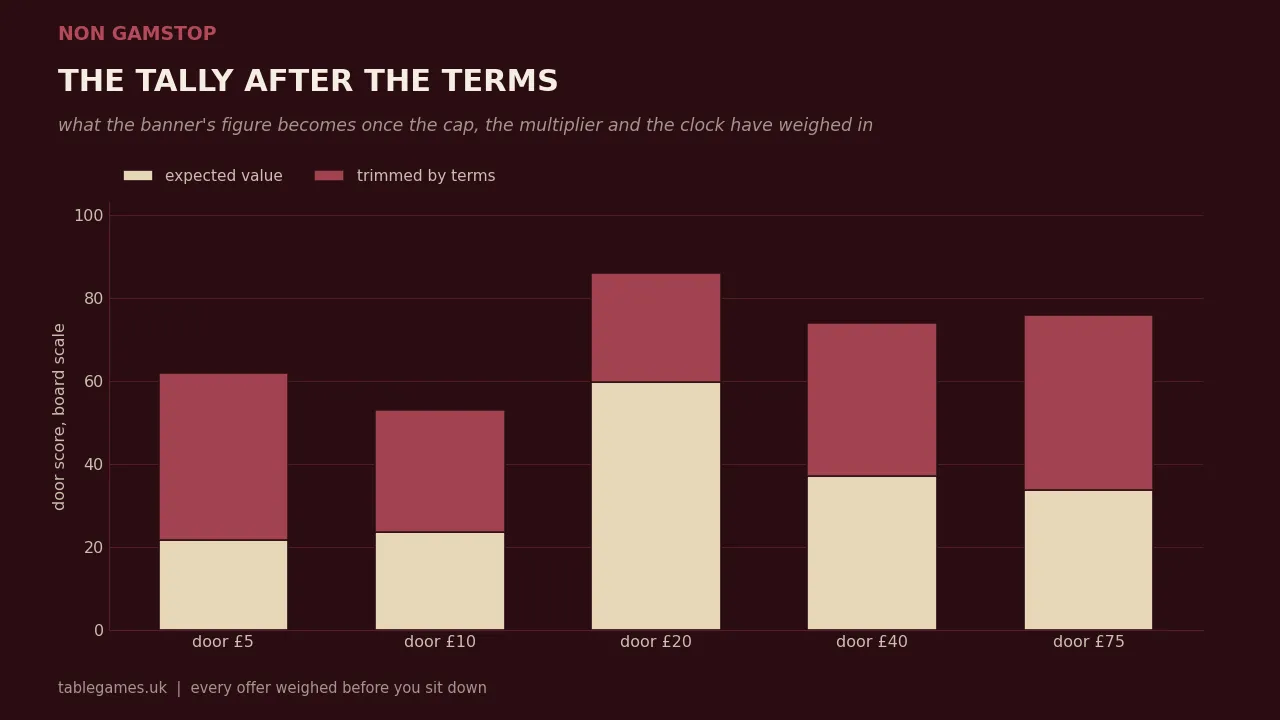
Reload offers, loyalty points and chat-game prizes fill the week's calendar, and each carries its own small cap or multiple. The tally worth keeping is simple: what went in as deposits, what the offers added, and what the terms require before any of it leaves. A player who keeps that tally in one note knows at a glance whether the week's offers were worth the tickets they sold, which is more than most rooms will ever say out loud.
| Brand | Welcome offer | Wagering | Min dep. | Withdrawal | Payments | Licence | Table score | Terms |
|---|---|---|---|---|---|---|---|---|
| JackpotJoy | Spend £10 play with £40–£70 (typical) | 2x–4x bingo / 40x pokiesbest | £5–£10best | 1–2 working days+2d | Visa · Mastercard · PayPal · Pay by mobile-1 rails | UKGC | 9.4 / 10 | Check the terms first |
| Amazon Slots | Spend £10 play with £40–£70 (typical) | 2x–4x bingo / 40x pokiesbest | £5–£10best | Under 24h to PayPal+24d | Visa · Mastercard · PayPal · Pay by mobile-1 rails | UKGC | 7.6 / 10 | Check the terms first |
| Double Bubble Bingo | £30–£50 bingo bonus on £10–£20 (typical) | 2x–4x bingo / 40x pokiesbest | £5best | Under 24h to PayPal+24d | Visa · PayPal · Skrill · Bank transfer-1 rails | UKGC | 7.6 / 10 | Check the terms first |
| Lucky Pants Bingo | Bingo tickets + spins on first spend (typical) | 4x bingo funds+2x | £5–£10best | Under 24h to PayPal+24d | Visa · PayPal · Skrill · Bank transfer-1 rails | UKGC | 7.6 / 10 | Check the terms first |
| Velobet | 100% up to €/£1,000 + spins (typical range) | 30x–45x by game+28x | €10 equivalent+5 | Instant–24h on cryptobest | Bitcoin · Litecoin · Visa · Bank transfer-1 rails | Offshore | 6.8 / 10 | Check the terms first |
| 10bet | 100% up to €200 + spins (typical range) | 40x typical+38x | €20+15 | 1–3 working days+3d | Visa · Mastercard · Skrill · Neteller-1 rails | Offshore | 5.7 / 10 | Check the terms first |
| Magic Red | 100% up to €200 + spins (typical range) | 40x typical+38x | €10–€20+5 | 2–5 working days+5d | Visa · Mastercard · Trustly · Bank transfer-1 rails | Offshore | 5.2 / 10 | Check the terms first |
| Mystake | 100% up to €/£1,000 + spins (typical range) | 35x typical+33x | €20 equivalent+15 | Under 24h on crypto+24d | USDT · BTC · ETH · TRX · Visabest | Offshore | 4.9 / 10 | Check the terms first |
| Boneenbet | 100% up to €/£1,000 + spins (typical range) | 35x typical+33x | €10 equivalent+5 | 24–48h (crypto fastest)+48d | Bitcoin · Litecoin · Visa · Bank transfer-1 rails | Offshore | 4.5 / 10 | Check the terms first |
| Roobet | Matched deposit up to €/£500 + spins (typical) | 35x typical+33x | €10 equivalent+5 | Under 24h on crypto+24d | BTC · ETH · USDT · MuchBetter-1 rails | Offshore | 4.5 / 10 | Check the terms first |
| NineWin | Matched deposit up to €/£500 + spins (typical) | 45x typical+43x | €10–€20+5 | 24–48h (crypto fastest)+48d | BTC · ETH · USDT · MuchBetter-1 rails | Offshore | 3.8 / 10 | Check the terms first |
| Fat Pirate | Crypto match up to 1 BTC equivalent (typical) | 45x typical+43x | €20 equivalent+15 | 24–48h (crypto fastest)+48d | Bitcoin · Litecoin · Visa · Bank transfer-1 rails | Offshore | 3.8 / 10 | Check the terms first |
The chat, the pace and the tally of an hour
An hour in a hosted room prices cleanly because the clock is public: games run to a schedule, tickets cost what the board says, and the spend per hour is multiplication. A room running twelve games an hour at a penny a ticket and four cards takes under 50p an hour to play; the same hour at 50p tickets and twelve cards takes £72. The room's own schedule and the player's own card count are the only two figures the multiplication needs.
The chat hosts sell company, and company is part of the product's honest value - but it is not a prize. The figure that matters is unchanged by the chat: tickets in, prizes out, the gap between them set by the room's published numbers. A player who prices the hour first, then buys the company with whatever the hour's stake allows, has the weighting right. A player who lets the chat set the pace is playing someone else's stake boxes.
The hour's tally has a third line for anyone who plays the side games between draws, and it is the line most often missed. Reels take stakes by the spin rather than by the schedule, so an hour that reads 50p in tickets can read several pounds once the reels are counted, and the room's clock stops pricing the session the moment the schedule is left. The honest tally separates the two: tickets on one line, side games on the other, and the deposit limit set against the sum rather than against the smaller figure.
The tally's other line is time. Bingo's clock is slow by design, which is a discipline feature the reels floor cannot offer: the stake box opens on a schedule rather than on demand. A player who wants to slow their own pace buys pre-bought tickets for the next games and closes the room between draws. The pause between games is one of the few places in gambling where the room itself enforces a breather, and it is worth using deliberately.
Where bingo sits against the tables
Against the table games, bingo's price structure reads differently. The tables publish their edges - the wheel's zero count, the banker's commission, the natural's price - while a bingo room publishes a pot and leaves the return unsaid. What bingo offers back is predictability of pace, a social floor the tables lack, and ticket prices that reach pennies. Neither product is the better price in the abstract; the honest comparison is the return per hour of play, and only one of the two prints its side of it.
The tables' figures deserve their own line here, because they anchor the comparison. A European wheel prices the standard bets at 2.70 per cent; banker at baccarat, with the standard commission, sits near 1.06 per cent; sound basic strategy at blackjack commonly holds the edge near half a per cent. Those fractions are printed, per-stake, long-run averages. A bingo ticket's equivalent is the gap between the ticket take and the prize fund, and it is computed, if at all, from the room's own posted numbers.
Most of the rooms that run these ticket boards are licensed offshore, which changes the desk a dispute reaches rather than the figures chalked above, and the licence question is weighed on its own page elsewhere on the site. For the ticket player the practical points stand whatever the flag: published pots, countable fields, a priced hour. The board above lists rooms against those lines, and the ticket's own arithmetic does the rest.
online bingo: the card before you buy in
Six lines settle a room before the first ticket, and every line is either printed by the room or countable in it. The card takes two minutes with the lobby open, and it converts a themed advert into a priced product: ticket price against posted pot, field size, hour's tally, offer terms. Nothing on it needs trust; everything on it needs a glance at figures the room has already published or a crowd the room already shows.
The ticket card, chalked before the first buy-in:
- Chalk the ticket price and the game's posted or guaranteed pot.
- Count the field before buying: odds against move with the crowd.
- Price the hour: games per schedule times cards times ticket price.
- Read the offer's weighting table before claiming a bonus in a bingo room.
- Check what share of the balance the side games can reach.
- Set a deposit limit and let the game's clock pace the session.
Bingo's honest price is the gap between the ticket take and the prize fund, and it is knowable wherever a room publishes or guarantees its pots. Weighed that way, the game is a slow, social, cheap-to-run stake with an unusually visible clock - and the player who chalks the figures before the first card buys the company knowingly rather than by accident. That is the whole discipline a ticket asks for, and it costs two minutes.
Frequently asked questions
What is the house edge on online bingo?
It is rarely printed, which is the honest starting point. The price lives in the gap between ticket sales and the prize fund the room returns, and rooms differ in how much of that equation they publish. A guaranteed pot against a known ticket price is the most readable case, because the prize side is fixed in writing. Where a room publishes nothing, assume the gap sits near the wider market's and price the hour conservatively.
How do 90-ball and 75-ball games differ?
The 90-ball game is the British standard: tickets of fifteen numbers in three rows, with prizes for a single line, then two, then the full house. The 75-ball game plays a five-by-five card, often with a pattern called per game rather than a straight line. The mechanics differ and the pricing question does not: in both shapes the ticket is the stake, the prize fund is the pot it feeds, and the field size moves the odds against.
Do more players make the game worse value?
It moves the value rather than simply lowering it. A busier room means a bigger prize fund from more tickets, but the same pot splits across more winning cards when the draws land, so one ticket's share shrinks. A guaranteed pot fixes the prize side while the ticket side stays open, which is why quiet rooms with fixed pots are the closest thing bingo sells to priced value. Count the field before buying; the room will not count it for you.
Can I clear a casino bonus by playing bingo?
Commonly not at a full rate, and sometimes not at all. Offer terms weight games against the wagering: reels are commonly counted in full, tables at a fraction, and bingo's own tickets sit anywhere from partial to excluded. The weighting table in the offer's terms names the rates, and it is the first thing to read before claiming in a bingo room. A bonus that bingo cannot clear is a voucher for the side games, whatever the banner shows.
Are free ticket offers worth taking?
They price by the same method as any bonus: what the offer adds, what the terms cap, and what the wagering demands before winnings leave. A free ticket with light terms is worth its face; a free ticket wrapped in heavy wagering is a promotion for the terms rather than the ticket. Read the cap and the multiple first, then decide. Reading costs nothing, and the distance between the two shapes is the whole value of the offer.
How much does an hour of bingo cost?
It multiplies out cleanly, because the clock is public. Games per hour times tickets per game times the ticket price is the whole figure: twelve games an hour, four cards at a penny each, is under 50p; the same hour at 50p tickets and twelve cards is £72. Both figures come from the room's own schedule and the player's own card count, so the hour can be priced before the room is entered rather than discovered inside it.