Mobile Casinos: the Same Felt, Smaller Screen
The screen shrinks; the odds do not. Weigh the phone as a window onto the same tables, then price the pace, the boxes and the rails around it.
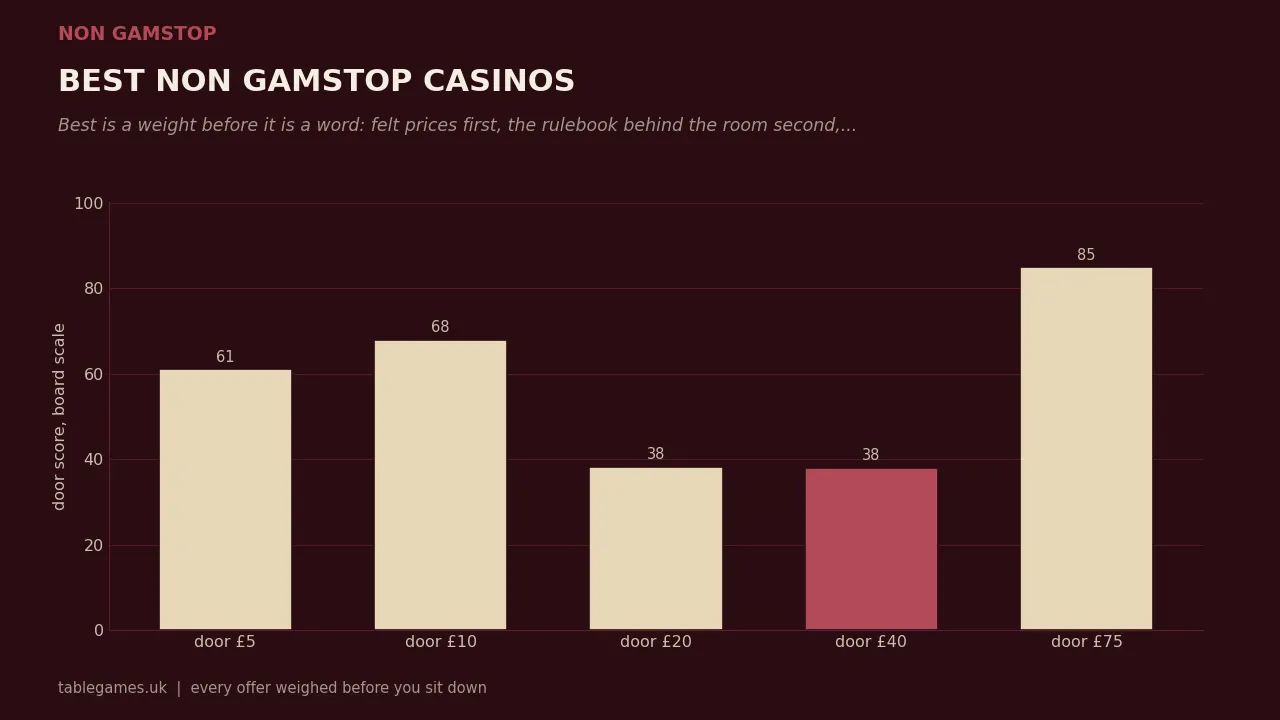
The table score
Four operators, weighed the way a croupier weighs a table: the entry price, the terms weight, the rails on offer, and how fast the cage pays. The scores are ours; the offers are quoted in the operator's own words.
Every card carries its table score out of 10 and four axis bars - licence, terms, payments and withdrawal. Offers move often - the operator's own page is always the current truth.

Welcome bonus €/£5,000 + 500 FS
Weigh the offer
Welcome pack €5,000 + 500 FS + €650 free bet
Weigh the offer
Casino welcome bonus 805% up to €6,400 + 280 FS
Weigh the offer
Welcome package 300% up to €/£1,000 + 150 FS
Weigh the offerCards appear in table-score order, the lower minimum deposit breaking ties. The bars visualise published figures, not a promise; nothing here is a recommendation to gamble, and the operator's own terms decide every claim.
What does a phone change about the price?
Nothing on the felt. The wheel still spins 37 pockets with a straight-up posted at 35 to 1; the banker line still books its standard commission; the natural in blackjack still reads as the rules panel prints it. A mobile casino is the same room seen through a smaller window, and the games' prices do not renegotiate because the screen shrank or because the session moved to a train. The weigh-in therefore starts where the price actually lives, and then follows the phone out into the surround.
The surround is where the differences queue up: the pace a session runs at, the rails the cashier offers, the signal that carries the rounds and the data the session draws. Each is priced somewhere real - a window, a cashier page, a tariff - and none of them is priced by the lobby banner, however loudly the banner shouts about the pocket. The phone changes the delivery and the tempo; it never changes the odds against, and a page that says otherwise is selling the window rather than the room.
The page runs in that order: the stake boxes, the per-hour tally, the rails in a pocket, the signal and its habits, and the felt maths that no screen moves. Figures first throughout, and every room-specific number hedged to its source, because cashier pages and table panels rather than articles carry the working figures. The board above shortlists rooms worth the pocket test, and the checks below run on any of them in the same few minutes. None of the checks needs an app or an account upgrade; each is a page read on the same screen the session will run on.
Stake boxes on a five-inch layout
Minimums are set by the table, not the screen. RNG tables commonly deal from 10p to £1 a round, and live floors commonly open anywhere between about 50p and £10, set studio by studio; both figures are printed on the table panel or the lobby tile before the seat is taken. The phone displays the same boxes the desktop page does, one thumb-scroll down, and the scroll is the only distance between the player and the two numbers that decide whether the seat fits the float. Both numbers are figures, not promises, and each is cheaper read in advance than discovered at the seat.
Maximums deserve the same respect at the other end of the card. Per-table ceilings vary by operator and by studio, they are not standardised across the market, and they are the one box a session plan cannot guess at. A plan that needs a three-figure float should confirm the ceiling before the first stake, because the phone's convenience argues for the seat while the box alone decides whether the seat fits. Both boxes are one tap deep on a page that is doing its job.
The float arithmetic prices the small screen honestly. Twenty pounds spread across a £1 outside spread on the wheel is twenty decided rounds; the same float at a 50p live blackjack floor is forty hands, which at live pace is most of an hour at the table. The phone suits small figures by construction, and the boxes above are what make that suit honest rather than limiting - a float sized to the boxes is a session that ends on schedule, in credit or otherwise. The boxes, not the banner, decide whether a pocket session fits the float, and the boxes are read in seconds.
Mobile casinos at a glance
- Entry price£10 typical
- Wagering30x on bonus
- Payout window3–5 working days
- Payments3 rails incl. e-wallet
Pace: the per-hour tally is the honest comparator
Time at a stake decides the tally, and the two screens run at very different clocks. Live tables commonly deal 50 to 70 blackjack hands an hour and 35 to 50 spins of the wheel, because the dealer and the chips set the tempo. RNG tables run to hundreds of rounds in the same hour, since nothing waits for a shuffle or a tray. The fraction charged per round is identical at either pace; the turnover is not, and turnover is what the edge multiplies. The gap between the two paces is the largest single figure on this page, and it is entirely in the player's hands.
Weighed in money: a £2 stake across 60 live hands an hour turns over £120, and at an edge commonly quoted near half a per cent with sound play, the expected cost is measured in tens of pence an hour. The same £2 at an RNG pace of 300 hands turns over £600 an hour and the expectation with it. Faster is not dearer per round and dearer per hour at the very same moment - which is why the comparator this page trusts is time at a stake, never the screen the stake was made on.
The pocket adds one more pace hazard that the hourly frame hides: sessions that fill gaps - a queue, a commute, an advert break - run shorter but more often, and a week of five-minute visits can out-turnover a single Saturday sitting. The honest comparator across a month is total rounds at total stake, which the account history lists and the banner never totals. the pocket slots page, spin by spin runs the same arithmetic on the slots side of the lobby.
Rails in a pocket: funding the small screen
The cashier travels with the room. Debit cards, the major wallets and phone billing all reach the phone, and the wallet tap is the shortest action in any cashier: amount, confirm, balance. The choice of rail is worth a minute before any deposit is made, not once a first win has landed, because the rails differ at the way out far more than they differ at the way in, and the way out is where a balance becomes spendable money again. A rail chosen for the tap alone is a rail chosen for half the journey, and the other half is where the waits live.
the two-tap rail weighed at the felt is the clean worked example: nothing at the wallet, the card's boxes behind it, and an out leg the room's cashier page alone decides. Phone billing sits at the other pole - small fixed caps, a charge that lands on the phone account, and commonly no return journey for winnings at all. Both are read on their own pages in this cluster, and both make the same point from opposite ends: the rail is chosen for the whole trip, never for the tap.
The withdrawal destination should be named before the first session, not after the first win. Most rails that take deposits on a phone pay their winnings out to a bank or a debit card instead, and the first cash-out commonly brings the standard identity checks with it, so the papers want to be current before the request. A player sitting on a win with no named destination waits on paperwork while the balance sits - the most avoidable wait on this entire page. Named once, the destination stands for every later session, and the cage stops being a question.
| Brand | Welcome offer | Wagering | Min dep. | Withdrawal | Payments | Licence | Table score | Terms |
|---|---|---|---|---|---|---|---|---|
| Pub Casino | Bet £10 get £30–£40 (typical) | 30x–40x by productbest | £10+5 | 1–3 working days+3d | Visa · PayPal · Paysafecard · Bank transfer-1 rails | UKGC | 8.2 / 10 | Check the terms first |
| BetVictor | 100% up to £/€100 + spins (typical) | 35x typical+5x | £10+5 | 24h e-wallets, 2–5 days cards+5d | Visa · Mastercard · PayPal · Apple Pay-1 rails | UKGC | 7.4 / 10 | Check the terms first |
| Kinghills | Crypto match up to 1 BTC equivalent (typical) | 30x–45x by gamebest | €10 equivalent+5 | Instant–24h on cryptobest | Bitcoin · USDT · Visa · Mastercard-1 rails | Offshore | 6.8 / 10 | Check the terms first |
| MrQ | Bet £10 get £30–£40 (typical) | 30x–40x by productbest | £5–£10best | Under 24h e-wallets+24d | Visa · Mastercard · Neteller · Pay by mobile-1 rails | UKGC | 6.6 / 10 | Check the terms first |
| 666 Casino | 100% up to £/€100 + spins (typical) | 30x–40x by productbest | £10–£20+5 | Under 24h e-wallets+24d | Visa · Mastercard · PayPal · Bank transfer-1 rails | UKGC | 6.6 / 10 | Check the terms first |
| JackpotCity | 100% up to €/£100 + 50 spins (typical) | 30x typicalbest | €10–€20+5 | 2–5 working days+5d | Visa · Mastercard · Trustly · Bank transfer-1 rails | Offshore | 5.9 / 10 | Check the terms first |
| Magic Red | 100% up to €200 + spins (typical range) | 40x typical+10x | €10–€20+5 | 2–5 working days+5d | Visa · Mastercard · Trustly · Bank transfer-1 rails | Offshore | 5.2 / 10 | Check the terms first |
| Gamdom | Matched deposit up to €/£500 + spins (typical) | 40x typical+10x | €10 equivalent+5 | Under 24h on crypto+24d | USDT · BTC · ETH · TRX · Visabest | Offshore | 4.5 / 10 | Check the terms first |
| Rolletto | 150% match + rakeback (typical range) | 35x typical+5x | €10 equivalent+5 | 24–48h (crypto fastest)+48d | Bitcoin · Litecoin · Visa · Bank transfer-1 rails | Offshore | 4.5 / 10 | Check the terms first |
| Donbet | Matched deposit up to €/£500 + spins (typical) | 40x typical+10x | €10 equivalent+5 | 24–48h (crypto fastest)+48d | Bitcoin · USDT · Visa · Mastercard-1 rails | Offshore | 4.1 / 10 | Check the terms first |
| Rainbet | Crypto match up to 1 BTC equivalent (typical) | 40x typical+10x | €20 equivalent+15 | Under 24h on crypto+24d | BTC · ETH · USDT · MuchBetter-1 rails | Offshore | 4.1 / 10 | Check the terms first |
| Fat Pirate | Crypto match up to 1 BTC equivalent (typical) | 45x typical+15x | €20 equivalent+15 | 24–48h (crypto fastest)+48d | Bitcoin · Litecoin · Visa · Bank transfer-1 rails | Offshore | 3.8 / 10 | Check the terms first |
Signal, storage and the interrupted round
A round on a phone is settled on the room's servers; the screen is the messenger, not the dealer. When the signal drops, a round already in motion has been accepted and priced, and the balance shows the outcome when the connection returns; a stake that never completed its confirmation usually books nothing at all. Round history, not memory, is the record that settles any query, and it is one tap away on the same screen where the round was placed. The distinction between the two cases is worth knowing before the tunnel rather than inside it.
Data is the quieter cost, and it belongs to the tariff rather than to the room. Games that cache after the first visit draw modestly thereafter; live video cannot cache and streams for the length of the session, which makes the live floor the heavy end of the bill. Wifi flattens the whole question to a rounding error, and the room's terms pass the cost through either way - the casino neither funds it nor bounds it, and no cashier page prints it.
One boundary travels with the device and belongs in any honest weigh: a room licensed offshore carries the same gap into the pocket, and whatever a British licence adds stays behind when the tables look this portable. The licence line in the footer is one thumb-scroll away on the same screen, and it is worth the scroll before any deposit is made, not once a dispute has started - the cheapest reading a pocket player can do. The pocket makes the check quicker, not less necessary, and quicker is the honest argument for doing it.
The felt maths no screen moves
The banker line is the pocket's cheapest seat: at the standard 5 per cent commission the house keeps about 1.06 in every 100 staked, with the player side a fraction behind at roughly 1.24, and the tie's 8 to 1 price runs near 14.4 - where a table pays 9 to 1 the tie falls toward 4.8. Those figures follow the table, not the device, and the tie price remains the quickest honesty check on any floor, full-size or pocket-sized, streamed or dealt. The screen adds reach and takes nothing away; the prices were fixed long before the phone was invented.
The side panels are where a small screen earns its warning label. Side wagers at the tables carry edges commonly quoted from about 2 per cent to above 25 - a multiple of the main game's price, printed in a panel of their own beside the felt. On a phone those panels sit closer to the thumb than they ever sat to the mouse, and the price is identical wherever it is tapped from, which is the whole point of weighing them before the session rather than during it.
Insurance keeps its own figure on the same screen: paid 2 to 1 on a separate wager about the dealer's hole card, with an edge commonly quoted in the 7 to 8 per cent range in a multi-deck game - well above the main game's price, hedged here because exact figures move with the deck count. The habit that travels is the one the desktop page teaches: read the posted lines before the seat, then sit anywhere the signal allows and let the layout do the talking.
The weigh card for the pocket
The pocket check costs two minutes and covers the whole surround: boxes, pace, rails, signal and the posted lines behind the lobby tile. None of it changes the games; all of it changes what a session costs to run, and where the balance goes when it comes home. The card reads in the order a session meets each figure, from the lobby tile to the way out, and it fits the same two minutes every time the device changes. Two minutes on a Tuesday buys a month of sessions that never argue with the cashier.
The card, chalked before the first session:
- Read the table panel's minimum and maximum before taking the seat.
- Size the session to pace: live hands crawl, RNG rounds sprint.
- Name the withdrawal destination before depositing, not once the first win has landed.
- Confirm the rail's out leg on the cashier page; wallets and cards differ.
- Run long or live sessions on wifi; streaming is the heavy end of the bill.
- Chalk the posted lines - tie price, natural, commission - from the rules panel.
Checked once per device, the card stays good for months: the boxes move rarely, the rails move rarely, and the felt never moves at all. What the phone adds is reach - the same tables in a queue, on a sofa, on a train - and reach is only worth having when the price of the seat is known before the thumb taps. Weighed this way, the pocket carries the whole table, and the table carries the same figures it carried at the desk.
Frequently asked questions
Are mobile casinos the same as desktop sites?
The account, the terms and the games' prices are the same document either way; the phone is a window onto the same room. What differs is the surround - pace, rails, signal and data - and each is priced somewhere real rather than in the banner. The honest comparison is per session: same felt, same odds, different clock and different courier.
Do tables cost more to play on a phone?
No. Minimums and maximums come from the table and the operator, and the phone displays the same boxes the desktop page prints: RNG tables commonly from 10p to £1 a round, live floors commonly from some 50p to £10 by studio. What can cost more is pace - faster rounds at the same stake turn over more per hour - and that is a session-length question.
What happens if the signal drops mid-round?
A round already in motion has been accepted and priced on the room's servers, and the balance reflects the outcome when the connection returns. A stake that never completed its confirmation usually books nothing. Live tables play a disconnected hand through to a standing call so the shared table is never stopped for one connection. Round history, not memory, settles any query afterwards.
How much data does a live table use?
More than any other part of the session, because the stream cannot cache and runs continuously: slots draw modestly once assets are stored, while an hour of live video can reach several hundred megabytes depending on the studio and the handset. Wifi reduces the question to nothing. The room's terms pass data costs through to the player either way.
Can I deposit and withdraw from a phone?
Deposits, yes, by card, wallet or phone billing, and the wallet tap is the shortest action in any cashier. Withdrawals depend on the rail: phone billing rarely carries a payout back, so rooms route cash-outs home to a bank account or debit card, and the first one commonly brings identity checks. Name the destination before the first deposit and the cage stays predictable.
Are app casinos different from browser play?
The terms attach to the account, not the screen, so clearing obligations and prices are identical either way. Apps add convenience - faster login, sometimes in-app deposits where the store allows - while the browser carries the full cashier and applies term updates the moment the page reloads. One caution travels with apps: one device carrying two accounts is the classic road to voided winnings.