Paysafecard Casinos: the Voucher Rail, Weighed
A voucher sets the stake box before the player does: only the loaded face value can leave. Weigh what the PIN buys, and where payouts travel instead.
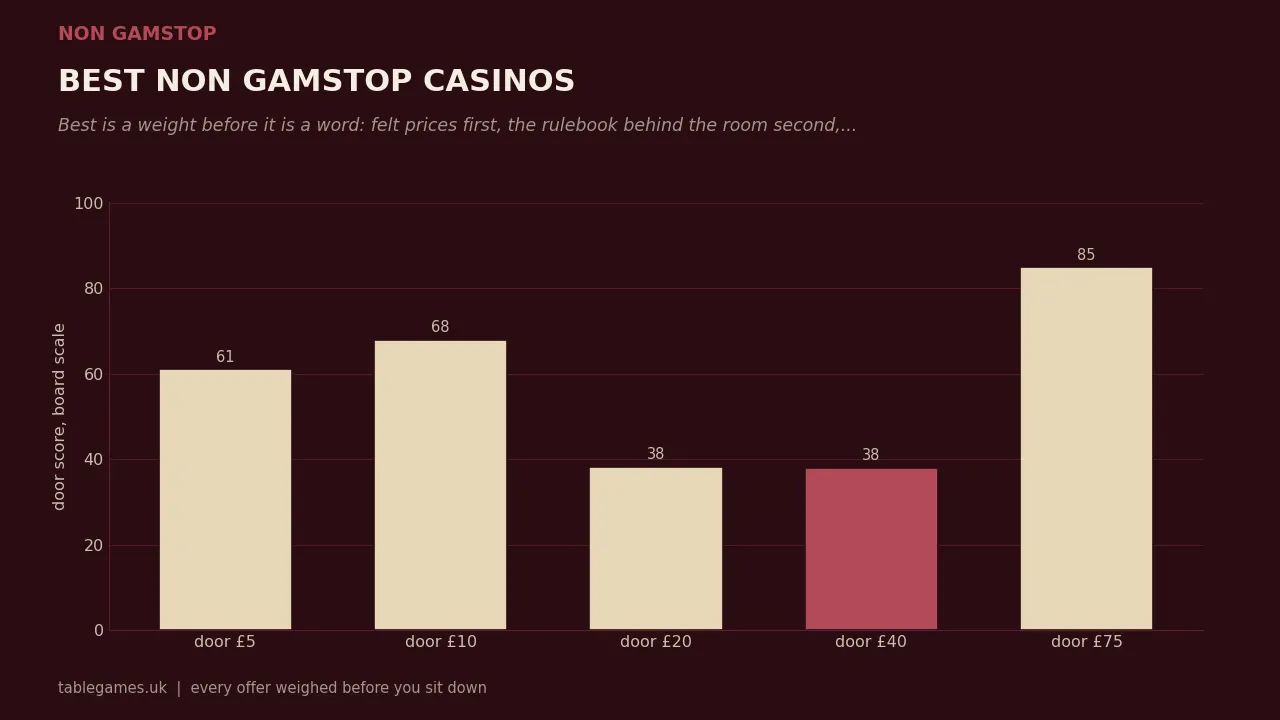
The table score
Four operators, weighed the way a croupier weighs a table: the entry price, the terms weight, the rails on offer, and how fast the cage pays. The scores are ours; the offers are quoted in the operator's own words.
Every card carries its table score out of 10 and four axis bars - licence, terms, payments and withdrawal. Offers move often - the operator's own page is always the current truth.

Welcome bonus €/£5,000 + 500 FS
Weigh the offer
Welcome pack €5,000 + 500 FS + €650 free bet
Weigh the offer
Casino welcome bonus 805% up to €6,400 + 280 FS
Weigh the offer
Welcome package 300% up to €/£1,000 + 150 FS
Weigh the offerCards appear in table-score order, the lower minimum deposit breaking ties. The bars visualise published figures, not a promise; nothing here is a recommendation to gamble, and the operator's own terms decide every claim.
What a paysafecard casino is, weighed at the PIN
A paysafecard is a prepaid voucher: money is loaded at a shop counter or online, a code is issued, and the code is spent at the room's cashier the way a cash note is spent at a window. A paysafecard casino is a room whose cashier accepts that code as a deposit rail. The mechanics are deliberately plain - buy the value, enter the digits, watch the balance rise - and the plainness is the product: no bank account is consulted on the way through, and no card details are handed over.
The felt is unchanged by any of it: a wheel with 37 pockets, a 2.70 per cent house take, a banker line with its commission, posted minimums that stay posted. A voucher deposit changes the funding story, not the odds. What changes is the shape of the stake box: a voucher holds a fixed face value, so the float is bounded before the session begins, by the player's own purchase rather than by the room's limits. That bounded shape is the rail's whole personality.
One line of context before the detail, since it shapes every other line. Rooms accepting voucher deposits from British players are, in the main, licensed offshore rather than in Britain - a fact stated on each room's own licence page, and worth one minute of reading there before any code is spent. The rest of this page is rail arithmetic, and the arithmetic runs the same whatever that page says.
The stake box the voucher sets
Vouchers are commonly sold in set face values, and the figure on the purchase is the figure that can be staked - hedged, because retail steps and online denominations vary. The bound arrives before the session does, which is a different order from every open rail: a card player chooses a stake and discovers a balance; a voucher player buys a balance and discovers the stake the balance supports. The budget decision is made at the counter, in cash terms, while the tables are still out of sight.
Worked in the clerk's units: a £25 voucher funds 25 rounds at a £1 RNG minimum, 12 at a £2 live blackjack table, or 8 at a £3 roulette outside stake. At a live shoe's pace of 50 to 70 hands an hour, the £25 float at £2 lasts twelve to fifteen minutes of shoe; at an RNG table's hundreds of rounds, the same float covers a wall-clock half hour or more at a fraction of the turnover. Same voucher, three sessions, and the difference is table choice rather than rail.
The app wallets sell a similar bound, and an app wallet with a hard ceiling weighs one of them properly: a top-up cap the player sets, rather than a face value the counter sells. The difference matters at the margins. A voucher's bound is absolute - the code spends to zero and then stops - while a wallet's cap can be raised from the sofa, which makes the voucher the harder boundary of the two. Players who want the rail to end when the money ends are describing a voucher.
Paysafecard casino at a glance
- Entry price£20 typical
- Wagering25x on bonus
- Payout window1–3 working days
- Payments4 rails incl. e-wallet
One direction: the deposit that does not return
Most voucher rails run one way, and this is the fact that organises the whole method. The deposit arrives by code; the withdrawal rarely does, because a voucher is a spending instrument rather than an account, and there is commonly nowhere for a payout to land. Rooms route winnings to a bank-transfer rail, a debit card or, failing that, to a wallet, and a first payout typically asks for the room's usual papers. The way out deserves chalking at the same time as the way in.
Plan it before the code is scratched. The room's payments page lists what the payout supports and what documents the first one asks for; naming the destination on day one converts a future win into a form to fill rather than a system to improvise. A player holding a win with nowhere named to send it waits on paperwork with the balance frozen, which is the commonest way a cheap deposit method becomes an expensive evening.
Leftover credit deserves its own line, because the rail's one-way shape applies to change as well. If a code is not fully spent at the room's cashier, the residue commonly stays on the voucher or in an associated online account rather than returning to the bank card, and converting it back is a chore worth avoiding. Sizing the purchase to the session - two smaller codes rather than one large one - keeps the residue near zero and the bound honest.
The wallet question sits at the end of the route, and it deserves an answer before the first code is bought. If the payout will travel to an e-wallet, that wallet wants an account in the player's own name, verified before it is needed; if it will travel to a bank, the account details want checking once, properly, rather than twice in a hurry. Five minutes at the payments page, matched against one's own accounts, closes the last open door the one-way rail leaves.
Fees, codes and the counter's small print
The voucher's price sits in two places, both hedged. At purchase, some retailers and online channels add a service fee or a premium over face value, and the figure varies by channel; at the room, most cashiers credit the code at face value without deduction, though terms differ and the cashier page settles it. Currency is a third line: a code bought in pounds and spent at a room settling in another unit takes a conversion somewhere in the path.
Codes have a shelf life in some setups, and expiry rules belong on the card before purchase rather than after. The associated online account, where one is used, commonly keeps several codes in one place and moves the balance around, which trades a little of the rail's simplicity for convenience - a fair trade only if the account is protected like any other wallet. None of these lines are reasons to avoid the rail; all of them are reasons to read the channel's own terms.
The receipt side is where the voucher is quietest. A cash purchase at a counter leaves no bank line at all; an online purchase leaves one payment line to the channel, not to the room. For a player who keeps a file - receipts, terms, balance screenshots - the voucher adds the code's purchase receipt and little else, which is the shortest paperwork story of any rail this site has weighed.
Small figures deserve one final honesty. A rail built for tens of pounds is weighed on different margins than a rail built for hundreds: a £2 fee is a rounding error on £400 and a real cost on £15, and vouchers live at the small end by design. So the comparison that matters is not the fee against other rails' fees but the fee against the float, chalked per session. At that exchange rate, a free channel and a face-value credit are worth more than any speed a faster rail can offer.
| Brand | Welcome offer | Wagering | Min dep. | Withdrawal | Payments | Licence | Table score | Terms |
|---|---|---|---|---|---|---|---|---|
| Pub Casino | Bet £10 get £30–£40 (typical) | 30x–40x by productbest | £10best | 1–3 working days+3d | Visa · PayPal · Paysafecard · Bank transfer-1 rails | UKGC | 8.2 / 10 | Check the terms first |
| Genting Casino | Matched deposit up to £/€200 (typical) | 40x typical+10x | £10–£20best | 1–3 working days+3d | Visa · Mastercard · Skrill · Apple Pay-1 rails | UKGC | 7.5 / 10 | Check the terms first |
| Paddy Power | £30–£50 in free bets (typical range) | 40x typical+10x | £10best | 24h e-wallets, 2–5 days cards+5d | Visa · Mastercard · Neteller · Pay by mobile-1 rails | UKGC | 7.0 / 10 | Check the terms first |
| Velobet | 100% up to €/£1,000 + spins (typical range) | 30x–45x by gamebest | €10 equivalentbest | Instant–24h on cryptobest | Bitcoin · Litecoin · Visa · Bank transfer-1 rails | Offshore | 6.8 / 10 | Check the terms first |
| NYSpins | 100% up to £/€100 + spins (typical) | 35x typical+5x | £10–£20best | Under 24h e-wallets+24d | Visa · Mastercard · Neteller · Pay by mobile-1 rails | UKGC | 6.3 / 10 | Check the terms first |
| JackpotCity | 100% up to €/£100 + 50 spins (typical) | 30x typicalbest | €10–€20best | 2–5 working days+5d | Visa · Mastercard · Trustly · Bank transfer-1 rails | Offshore | 5.9 / 10 | Check the terms first |
| 10bet | 100% up to €200 + spins (typical range) | 40x typical+10x | €20+10 | 1–3 working days+3d | Visa · Mastercard · Skrill · Neteller-1 rails | Offshore | 5.7 / 10 | Check the terms first |
| Mystake | 100% up to €/£1,000 + spins (typical range) | 35x typical+5x | €20 equivalent+10 | Under 24h on crypto+24d | USDT · BTC · ETH · TRX · Visabest | Offshore | 4.9 / 10 | Check the terms first |
| Boneenbet | 100% up to €/£1,000 + spins (typical range) | 35x typical+5x | €10 equivalentbest | 24–48h (crypto fastest)+48d | Bitcoin · Litecoin · Visa · Bank transfer-1 rails | Offshore | 4.5 / 10 | Check the terms first |
| Roobet | Matched deposit up to €/£500 + spins (typical) | 35x typical+5x | €10 equivalentbest | Under 24h on crypto+24d | BTC · ETH · USDT · MuchBetter-1 rails | Offshore | 4.5 / 10 | Check the terms first |
| Rainbet | Crypto match up to 1 BTC equivalent (typical) | 40x typical+10x | €20 equivalent+10 | Under 24h on crypto+24d | BTC · ETH · USDT · MuchBetter-1 rails | Offshore | 4.1 / 10 | Check the terms first |
| Fat Pirate | Crypto match up to 1 BTC equivalent (typical) | 45x typical+15x | €20 equivalent+10 | 24–48h (crypto fastest)+48d | Bitcoin · Litecoin · Visa · Bank transfer-1 rails | Offshore | 3.8 / 10 | Check the terms first |
The voucher against the other rails, weighed
Set against a debit card, the voucher trades openness for bound: the card spends what the account holds across a month, the voucher spends what the counter sold in one purchase. Against a wallet, the voucher trades flexibility for finality - a wallet can be topped up from the sofa, a code cannot. Against phone billing, the closest cousin in shape, the difference is the statement: the phone rail writes a line on a bill the player already reads, while a cash voucher writes nothing anywhere.
The phone rail's own card is worth a read beside this one: the phone-billed cousin of this rail weighs daily caps, one-way flows and the name the charge travels under. The two rails share a design instinct - small figures, hard bounds, no lane for payouts - and they share the same consequence: the payout route must be named before the deposit, because neither rail will carry the money back. Read together, they price the whole family of small-figure rails.
Where the voucher loses, it loses honestly: no rail this slow to top up, this bounded, and this one-way competes with a wallet on convenience. The counterargument is that convenience was never the point. A rail that ends when the money ends is a budget with a PIN on it, and for the player whose weak point is the open-ended card, the inconvenience is the feature priced in. Weigh the rails against the player's own habits, not against each other.
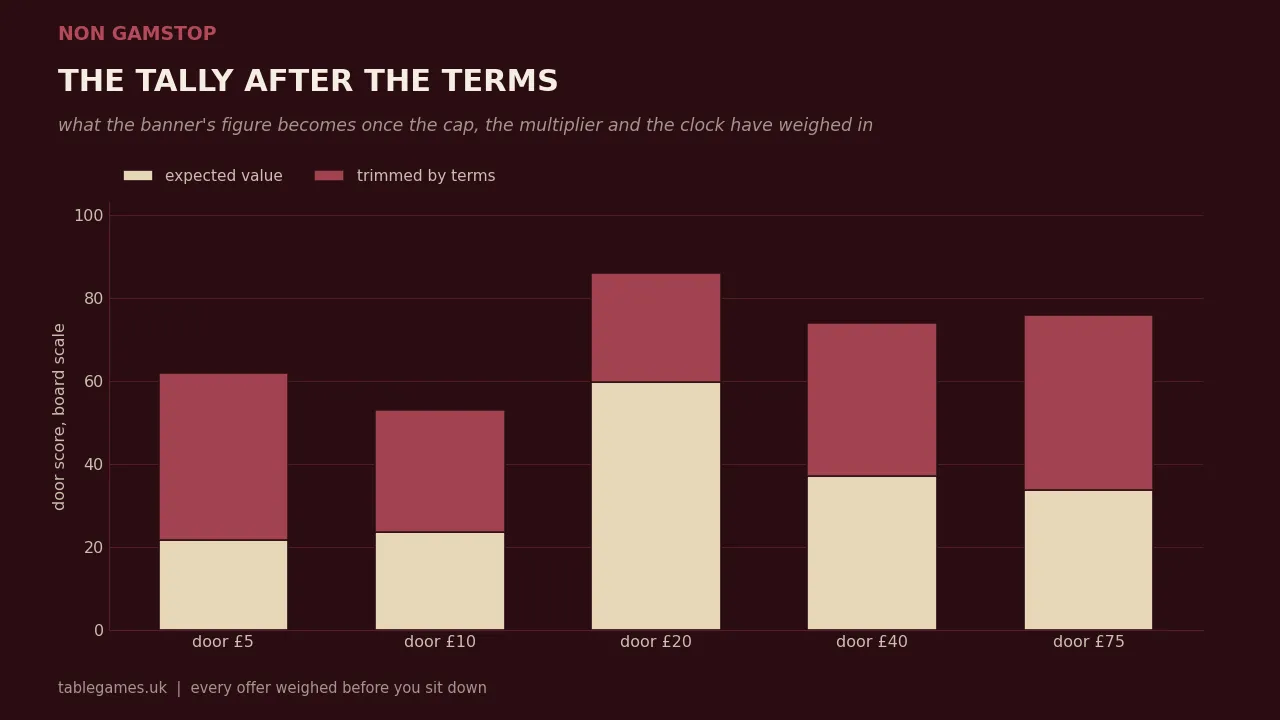
What the voucher does to the paperwork
The bank statement is where most rails leave their story, and the voucher is the rail that least often writes one. Cash purchases leave nothing; online purchases leave a single line to the voucher channel rather than a scatter of room names. For a player building a file for future verification checks, the deposit story is short by construction: codes bought, codes spent, balances from the room's own ledger.
Short does not mean absent. Identity checks at a first payout are still standard at most rooms, still document-based, and still faster for a player whose file is ready - the voucher does not skip the cage, it only shortens the payment story inside the file. Receipts for the codes belong in the folder beside the room's terms, because a code is a bearer instrument and its purchase receipt is the only proof of where the float came from.
The budget story is the one the voucher writes best. Face values purchased per week, tallied honestly, are a spending record in themselves - the counter sells a bound, and the tally of bounds is the habit made visible. Players who want the record without the discipline can get it from any rail's statement; players who want the discipline get it from the voucher's shape, which refuses to spend what was never loaded.
The voucher card: five checks at the counter
Five checks settle a voucher deposit in one visit, and four of them happen before the code is even scratched. What the room credits against a code, and whether any deduction applies. What the payout route will be, named in advance. What the first payout will ask for. What the residue rules are if the code is not fully spent. And what face value matches the session planned. Carded, the cheapest rail on the site is also the most predictable one.
Chalked before the code is scratched:
- Size the purchase to the session, not to the month ahead.
- Confirm on the cashier page that codes credit at face value.
- Name the payout destination on day one, with details kept current.
- Check expiry and residue rules before buying, not after spending.
- Keep the purchase receipt with the room's terms in one file.
- Expect papers at the first payout, and keep them ready.
The voucher's promise is a stake box with walls, and the promise is kept by arithmetic rather than willpower: the code spends to zero and stops. Price the fees, name the payout route, size the purchase to the session, and the rail does one job without opinions. The tables never asked how the money arrived, and the voucher never tells them - it simply bounds the answer to the only question that matters, which is how much was ever on the table.
Frequently asked questions
Can I withdraw winnings to paysafecard?
Commonly no, and the plan should assume it. A voucher is a spending instrument rather than an account, so most rooms pay withdrawals into a bank transfer, a debit card or else a wallet, and the first payout usually asks for the standard papers. The room's payments page lists the routes it supports; reading it before the first deposit costs a minute and saves the improvisation of naming a destination after the money has already won.
How much can I deposit with a voucher?
The face value sets the floor of the answer and the room sets the rest: codes are commonly sold in a range of set values, and rooms may cap voucher deposits per transaction or per day at figures on their cashier pages. Hedged throughout, because retail steps vary by channel and ceilings vary by room. The practical figure is the one planned for the session, bought at the counter, and no larger than the stake box it has to fill.
Do vouchers carry fees?
Two places to check. The purchase channel may add a service fee or premium over face value, varying by retailer and by country; the room's cashier commonly credits codes at face value, though terms differ and the payments page settles the question. Currency conversion, where the room settles in another unit, adds a spread somewhere in the path. None of the figures are large individually, but on small floats a few pounds of fees is a percentage worth noticing.
Is a voucher deposit anonymous?
Less than the marketing suggests, and more than a card. The purchase itself can be made with cash at a counter, which keeps the bank record clean; the room, however, operates an account, and accounts mean registration, verification at withdrawal and the operator's own record-keeping, all of which are standard. Treat the rail as private from the bank rather than anonymous from the room, and read the room's privacy terms with the same seriousness as any other cashier document.
What happens to credit left on a code?
Commonly it stays on the voucher or in an associated online account rather than returning to the bank, and the channel's own terms govern what can be done with it - held for later, spent elsewhere or, in some setups, transferred. The chore is avoidable rather than inevitable: sizing codes to the session keeps residues near zero, and spending a code fully at one room is simpler than splitting it. Read the residue rules before purchase, while they still shape the plan.
Is a voucher better than a debit card for budgeting?
Different tool, different habit. A debit card spends what an account holds across a month, which requires the tally to be read; a voucher spends exactly what was bought, which requires nothing to be read at all. The bound is the voucher's entire argument, and for a player whose weak point is the open-ended session, a hard bound beats a soft record. For everyone else, the card's convenience and payout capability remain the stronger all-round rail.